Pergeseran Paradigma Positivisme dan Nonpositivisme dalam Penelitian Pendidikan: Telaah Kritis terhadap Landasan Epistemologis dan Metodologis Shifts in Positivist and Nonpositivist Paradigms in Educational Research: A Critical Examination of Epistemological and Methodological Foundations
Main Article Content
Abstract
As paradigms in educational research evolve, they change how researchers understand reality, acquire knowledge, and select research methods. The implications of this shift for methodological decisions warrant further critical examination. This study aimed to analyze paradigm shifts involving positivism and nonpositivism by examining their epistemological foundations, methodological characteristics, and implications for educational research. This qualitative literature review used critical conceptual analysis to examine scholarly books, journal articles, and methodological publications selected for their relevance and credibility. The analysis involved identifying and categorizing concepts, comparing perspectives, and synthesizing scholarly arguments. The findings indicate that the paradigm shift has broadened the ways in which researchers understand objectivity, subjective experience, the construction of meaning, and the social context of education. Positivism remains one of the foundations within this range of perspectives. Differences in epistemological assumptions influence the selection of methods, the use of evidence, and the interpretation of research findings. This review concludes that alignment among philosophical assumptions, research objectives, and methods is fundamental to the quality of educational research. Understanding this alignment can help researchers select and justify an approach suited to their study’s objectives and context.




Citation Metrics:



Downloads
Citation Metrics & Similar Scopus Articles
-
Wan Hussain W.N.H. (2027)Adaptation and psychometric validation of a science classroom climate scale for Malaysian primary science educationLearning Environments Research, 30(1)
-
Cotton A. (2027)From affiliation to mobilization: differential indicators of insider threat actors in higher educationSecurity Journal, 40(1)
-
Yavarmanesh K. (2027)Association between Depression Literacy and Health-Promoting Behaviors among Pregnant Women Referred to Health CentersIranian Journal of Health Education and Health Promotion, 15(1), 52-67
Article Details

Authors retain copyright and grant the journal right of first publication with the work simultaneously licensed under a Creative Commons Attribution-NonCommercial-ShareAlike 4.0 International License that allows others to share the work with an acknowledgement of the work's authorship and initial publication in this journal.
References
Baškarada, S., & Koronios, A. (2018). A philosophical discussion of qualitative, quantitative, and mixed methods research in social science. Qualitative Research Journal, 18(1), 2–21. https://www.emerald.com/qrj/article-abstract/18/1/2/359015/A-philosophical-discussion-of-qualitative
Biesta, G. (2026). Has research on “what works” in education been looking at the wrong interventions? Revisiting “Why ‘what works’ won’t work.” Educational Theory, 76(1), 16–24. https://doi.org/10.1111/edth.70063
Chafe, R. (2024). Different paradigm conceptions and their implications for qualitative research. International Journal of Qualitative Methods, 23. https://doi.org/10.1177/16094069241282871
Cohen, L., Manion, L., & Morrison, K. (2018). Research methods in education (8th ed.). Routledge.
Creswell, J. W., & Creswell, J. D. (2023). Research design: Qualitative, quantitative, and mixed methods approaches (6th ed.). SAGE Publications. https://www.sagepub.com/shop/buy-a-book/research-design-6-270550
Dahal, N., Hasan, M. K., & Islam, M. T. (2026). Reframing educational research through principled pluralism: Rethinking philosophies, paradigms, and methodological traditions. Frontiers in Research Metrics and Analytics, 11, Article 1938945. https://www.frontiersin.org/journals/research-metrics-and-analytics/articles/10.3389/frma.2026.1938945/full
Dawadi, S., Shrestha, S., & Giri, R. A. (2021). Mixed-methods research: A discussion on its types, challenges, and criticisms. Journal of Practical Studies in Education, 2(2), 25–36. https://doi.org/10.46809/jpse.v2i2.20
Guba, E. G., & Lincoln, Y. S. (1994). Competing paradigms in qualitative research. In N. K. Denzin & Y. S. Lincoln (Eds.), Handbook of qualitative research (pp. 105–117). SAGE Publications.
Kaushik, V., & Walsh, C. A. (2019). Pragmatism as a research paradigm and its implications for social work research. Social Sciences, 8(9), Article 255. https://doi.org/10.3390/socsci8090255
Kivunja, C., & Kuyini, A. B. (2017). Understanding and applying research paradigms in educational contexts. International Journal of Higher Education, 6(5), 26–41. https://doi.org/10.5430/ijhe.v6n5p26
Kuhn, T. S. (2012). The structure of scientific revolutions (4th ed.). University of Chicago Press. https://doi.org/10.7208/chicago/9780226458144.001.0001
Lincoln, Y. S., & Guba, E. G. (1985). Naturalistic inquiry. SAGE Publications. https://www.sagepub.com/shop/buy-a-book/naturalistic-inquiry-1-842
Lu, Y. (2026). A bibliometric sketch of research paradigm shifts and divides: The case of race and education scholarship. AERA Open, 12. https://doi.org/10.1177/23328584261484159
May, D. E. (2025). A brief discussion of research philosophies for higher education students. European Journal of Education, 60(1), Article e70027. https://doi.org/10.1111/ejed.70027
Mbhiza, H. (2024). Research paradigms in education: A comparison among Foucault’s postmodernism, positivism, interpretivism and critical theory. South African Journal of Higher Education, 38(6), 1–13. https://doi.org/10.20853/38-6-5922
Mislay, M. A., & Anania, A. M. (2025). Determinants of postgraduate students’ awareness and utilization of educational research paradigms and approaches in a public university in Tanzania. Social Sciences & Humanities Open, 11, Article 101197.
Morgan, D. L. (2014). Pragmatism as a paradigm for social research. Qualitative Inquiry, 20(8), 1045–1053. https://doi.org/10.1177/1077800413513733
Pretorius, L. (2024). Demystifying research paradigms: Navigating ontology, epistemology, and axiology in research. The Qualitative Report, 29(10), 2698–2715. https://doi.org/10.46743/2160-3715/2024.7632
Shan, Y. (2022). Philosophical foundations of mixed methods research. Philosophy Compass, 17(1), Article e12804. https://doi.org/10.1111/phc3.12804
Article Sidebar
 Page Numbers:
4950-4968
 Digital Object ID:













 Viewed: 18 times
 Downloaded: 12 times
LYAS Publisher cordially invites qualified professionals to serve as Editors or Reviewers. Your expertise will make an important contribution to maintaining and strengthening the academic quality of our publications. Interested applicants are kindly requested to complete the application form at the following link: Editors & Reviewers
Please feel free to contact us if you need any further information about the submission process or if you have any additional questions.

 Authors:
 Copyright :
Authors retain copyright and grant the journal right of first publication.
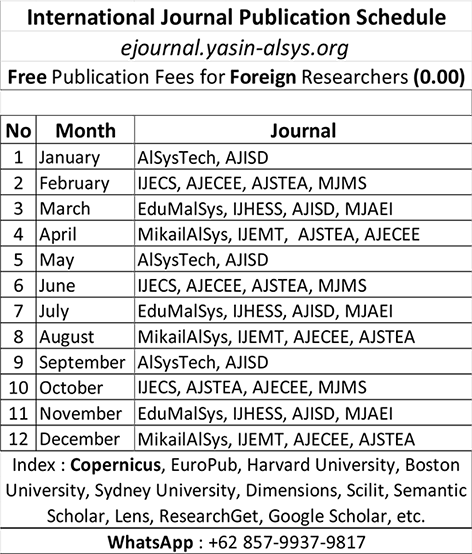
Explore Our Journals
Find the journal that best fits your research. If this journal does not match your manuscript’s scope, explore our portfolio below to select a more suitable publication venue.