Analisis Miskonsepsi Siswa pada Materi Arus Bolak-Balik melalui Four-Tier Diagnostic Test Analysis of Students’ Misconceptions about Alternating Current Using a Four-Tier Diagnostic Test
Main Article Content
Abstract
Mapping students’ conceptions of alternating current is necessary to determine how well they understand the concepts they have studied. This study aimed to analyze misconceptions and identify levels of conceptual understanding among students at SMA Negeri 8 Mandau based on conception categories. The study used a quantitative descriptive design and involved 70 students from two Grade 12 classes. Data were collected using a 15-item Four-Tier Diagnostic Test. Each item comprised four tiers covering answer selection, confidence in the selected answer, reason selection, and confidence in the selected reason. Analysis of 1,050 responses showed that 26.29% fell into the Scientific Knowledge category, 6.86% into False Positive, 4.38% into False Negative, 2.95% into Misconception, and 59.52% into Lack of Knowledge. At the item level, Item 12 had the highest percentage of misconceptions (7.14%), while among topic groups, impedance and resonance in RLC circuits had the highest percentage (4.29%). Overall, the level of misconceptions was classified as low. The predominance of the Lack of Knowledge category indicates that students’ understanding of alternating current concepts still needs to be strengthened. These findings can provide a basis for evaluating and selecting instructional strategies aimed at strengthening students’ conceptual understanding.




Citation Metrics:




Downloads
Citation Metrics & Similar Scopus Articles
-
Begzhanova G.B. (2027)Study of the suitability of industrial raw material resources as additives for Portland cementKompleksnoe Ispolzovanie Mineralnogo Syra, 341(2), 71-82
-
El Yamani Z. (2027)Mapping the literature on entrepreneurial education and students’ entrepreneurial mindset and intention: A bibliometric review using the SPAR-4-SLR protocol and the TCCM frameworkMultidisciplinary Reviews, 10(3)
-
Cotton A. (2027)From affiliation to mobilization: differential indicators of insider threat actors in higher educationSecurity Journal, 40(1)
Article Details

Authors retain copyright and grant the journal right of first publication with the work simultaneously licensed under a Creative Commons Attribution-NonCommercial-ShareAlike 4.0 International License that allows others to share the work with an acknowledgement of the work's authorship and initial publication in this journal.
References
Aida, N. (2022). Literasi Digital dengan Penggunaan PhET untuk Remediasi Miskonsepsi Mahasiswa pada Materi Rangkaian Arus Searah. JPF (Jurnal Pendidikan Fisika) Universitas Islam Negeri Alauddin Makassar, 11(1), 16–23. https://journal.uin-alauddin.ac.id/index.php/PendidikanFisika/article/view/33635
Apriliyanti, N., & Ermawati, F. U. (2022). Five-level conception diagnostic test on electromagnetic induction concepts: Feasibility test and overview of students’ concept understanding level. Prisma Sains: Jurnal Pengkajian Ilmu dan Pembelajaran Matematika dan IPA IKIP Mataram, 10(1), 1–20. https://e-journal.undikma.ac.id/index.php/prismasains/article/view/4658
Ariyanti, V. E., Kusuma, R. B., & Yulianti, A. (2024). Literature review: The use of the four-tier diagnostic test in identifying misconceptions in physics education. Indonesian Journal of Teacher Education, 5(2), 154–165. https://journal.publication-center.com/index.php/ijte/article/view/2404
Azzahroiha, C., Putri, P. N., Muntholib, & Ningtiyas, N. A. L. (2022). Identifikasi Miskonsepsi Siswa pada Materi Listrik Kelas IX di MTs Surya Buana Malang. Jurnal MIPA dan Pembelajarannya, 2(5), 345–351. https://journal3.um.ac.id/index.php/mipa/article/view/3520
Eliza, N., Tandililing, E., & Hidayatullah, M. M. S. (2022). Analisis Kemampuan Pemahaman Konsep Fisika terhadap Minat dan Motivasi Belajar Peserta Didik pada Materi Usaha dan Energi Kelas X di SMA Negeri 6 Pontianak. Jurnal Inovasi Penelitian dan Pembelajaran Fisika, 3(1), 43–50. https://doi.org/10.26418/jippf.v3i1.49183
Frans, B. U., & Wasis. (2022). Penerapan LKS Berbasis PhET untuk Mereduksi Miskonsepsi Siswa pada Materi Arus Listrik Bolak Balik. Jurnal Penelitian Pembelajaran Fisika, 13(1), 31–40.
Gupita, N. D., Yanti, A. R., & Untoro, N. (2022). Analysis of student’s misconceptions in static and dynamic electricity physics using the three tier test. Impulse: Journal of Research and Innovation in Physics Education, 2(2), 119–127. https://doi.org/10.14421/impulse.2022.22.06
Halim, A., Alinda, M., Mahzum, E., Wahyuni, A., & Ngadimin. (2024). Impact of using PhET and NI Multisim simulation on understanding electrical circuit concepts. Jurnal Penelitian & Pengembangan Pendidikan Fisika, 10(1), 161–172. https://journal.unj.ac.id/unj/index.php/jpppf/article/view/41324
Istiyono, E. (2022). Diagnostic tests as an important pillar in today’s physics learning: Four-tier diagnostic test a comprehensive diagnostic test solution. Journal of Physics: Conference Series, 2392(1), Article 012001.
Marpuah, S., & Istiyono, E. (2026). Pengembangan Instrumen Penilaian Kognitif Berbasis Pembelajaran Mendalam pada Materi Rangkaian Arus Bolak-Balik SMA. Jurnal Sains dan Edukasi Sains, 9(2), 59–66. https://ejournal.uksw.edu/juses/article/view/20969
Meda, T. (2025). Efektivitas Physics Interactive Multimedia pada Materi Listrik Bolak-Balik untuk Meningkatkan Literasi Digital Menggunakan Flipped Learning. Ideguru: Jurnal Karya Ilmiah Guru, 10(3), 2048–2053.
Musriyanti, R., Suherman, A., & Septiyanto, R. (2022). Penggunaan Google Jamboard dalam Pembelajaran Online terhadap Motivasi Belajar Peserta Didik pada Materi Arus Bolak Balik. Jurnal Eksakta Pendidikan (JEP), 6(2), 152–160.
Nur, A. Z., Syuhendri, S., & Siahaan, S. M. (2023). Kajian Literatur: Penggunaan Asesmen Diagnostik Berformat Four-Tier untuk Mengidentifikasi Pemahaman Konsep dan Miskonsepsi. JIIP - Jurnal Ilmiah Ilmu Pendidikan, 6(5), 3666–3671. https://jiip.stkipyapisdompu.ac.id/jiip/index.php/JIIP/article/view/2072
Pratama, D. (2025). A reduction in undergraduate misconceptions on AC circuits through interactive simulations. Kasuari: Physics Education Journal (KPEJ), 8(1), 272–284.
Safitri, G., Sitompul, S. S., & Hamdani. (2022). Analisis Miskonsepsi Peserta Didik pada Materi Listrik Statis Menggunakan Four Tier Diagnostic. Jurnal Pendidikan: Riset dan Konseptual, 6(4), 593–601.
Tsabitah, N. N., Sarkity, D., Abdurrahman, N., Rizkylillah, M. S., & Angwen, J. A. (2024). Digitalisasi Pembelajaran melalui Pengembangan E-Modul Berbasis Flipbook untuk Pembelajaran Rangkaian Arus Bolak-Balik dan Kemagnetan di SMKN 55 Jakarta. Jurnal Studi Edukasi Integratif, 1(3), 133–143. https://pustaka.biz.id/journal/jsei/article/view/40
Widya, Dahliana, Zahara, S. R., Syafrizal, Fatmi, N., Ginting, F. W., & Ibrahim, A. (2025). Penerapan Model Pembelajaran Problem Based Learning Berbantuan Alat Peraga untuk Meningkatkan Hasil Belajar Siswa pada Materi Rangkaian Arus Bolak-Balik. Celsius: Current Advances in Physics Education and Research Journal, 1(2), 67–75. https://jurnal.ut.ac.id/index.php/celsius/article/view/9770
Winari, D. R., & Masturi. (2023). Pengembangan Instrumen Tes Two-Tier Multiple Choiche Berbasis HOTS pada Materi Rangkaian Arus Bolak-Balik. INPAFI (Inovasi Pembelajaran Fisika), 11(1), 32–40. https://jurnal.unimed.ac.id/2012/index.php/inpafi/article/view/43856
Xie, L., Li, Y., Fu, Q., Xiao, Y., Yang, L., & Bao, L. (2025). Assessing and enhancing university students’ knowledge integration in learning electromagnetic induction. International Journal of Science Education, 47(13), 1659–1681.
Zuhdi, M., & Busyairi, A. (2021). Misconception profile of prospective physics teachers assessed from various representations of electricity subjects. Journal of Science and Science Education, 2(1), 33–37.
Article Sidebar
 Page Numbers:
3300-3319
 Digital Object ID:













 Viewed: 26 times
 Downloaded: 10 times
LYAS Publisher cordially invites qualified professionals to serve as Editors or Reviewers. Your expertise will make an important contribution to maintaining and strengthening the academic quality of our publications. Interested applicants are kindly requested to complete the application form at the following link: Editors & Reviewers
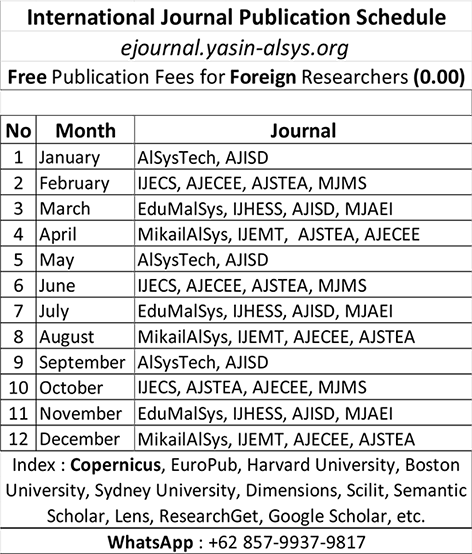
Please feel free to contact us if you need any further information about the submission process or if you have any additional questions.

 Authors:
 Copyright :
Authors retain copyright and grant the journal right of first publication.
Explore Our Journals
Find the journal that best fits your research. If this journal does not match your manuscript’s scope, explore our portfolio below to select a more suitable publication venue.