
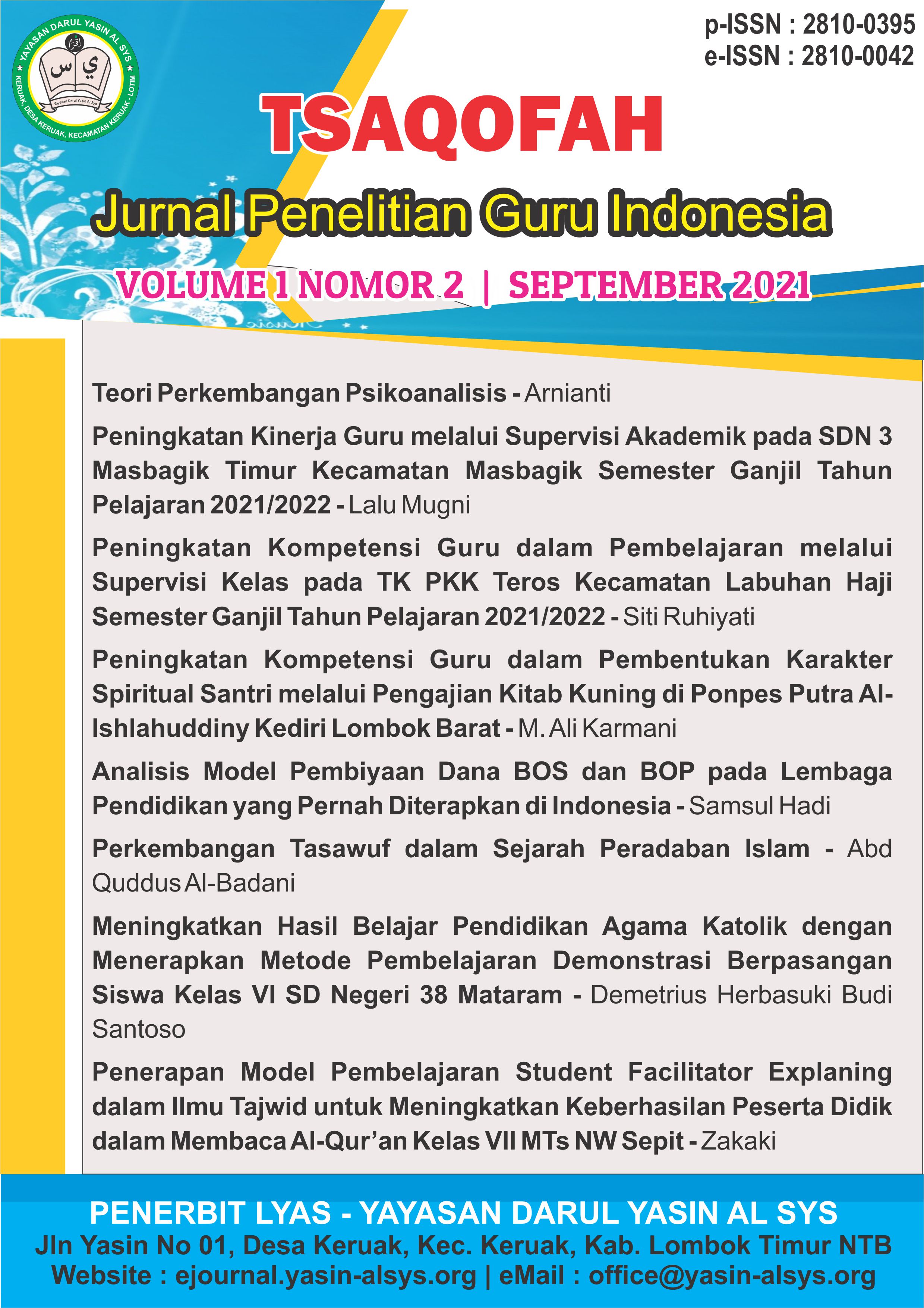
Analisis Model Pembiyaan Dana BOS dan BOP pada Lembaga Pendidikan yang Pernah Diterapkan di Indonesia
Main Article Content
Abstract
This study aims to describe the financing model for BOS Funds and BOM/BOP in educational institutions that have been implemented in Indonesia. The research used descriptive qualitative. Data collection techniques using observation, and document study. Research results (1). The education financing system in Indonesia is borne by the central government, regional governments and the community. The education financing models in Indonesia are sourced from a). Central Government and Local Government in the form of BOS Fund (School Operational Assistance), BOP (Education Operational Assistance) and b). Parents / Guardians of Students. The types of expenditures by parents/guardians for education include: 1) Base Fee, 2) Monthly Tuition / Tuition Fees, 3) Mid-Semester Examination Fees, 4) End of Semester Examination Fees, Extracurricular Activities Fees, 6) Practicum Activities Fees , 7) Purchase of Textbooks / LKS, 8) Purchase of School Uniforms, 9) Expenses for Field Trips / Mental Development / Retreats, 10) Social Donations, 11) Other expenses. (2) Analysis of education financing models that have been applied in Indonesia such as BOS/BOP and others. In the government regulations for the period of disbursement and reporting of School and Madrasah and PAUD BOS funds which the authors have classified, there are advantages and disadvantages in their implementation. In the initial period there was the involvement of Provincial and District BOS Managers so that in the process of filing the disbursement and reporting of BOS Funds they could be guided and supervised directly. Meanwhile, in the latest regulation, the process of filing for disbursement and reporting of BOS Funds is directly guided and fostered by the Central BOS manager.




Citation Metrics:



Downloads
Citation Metrics & Similar Scopus Articles
-
Ding S. (2027)Digital Renewal of University Education: Barriers, Opportunities, and Contributions to Sustainable Development Goals (SDGs)Asean Journal of Educational Research and Technology, 6(2), 229-240
-
Trisnowati E. (2027)Science, Technology, Engineering, and Mathematics (STEM) and Research Skill Development (RSD) in Science Education in Higher Education: A Delphi-Based ModelAsean Journal of Educational Research and Technology, 6(2), 253-268
-
Unyaphatariyakool S. (2027)Science Teachers’ Learning Management Competency through Professional Learning Communities to Promote Scientific Creativity and Sustainable Development Goals (SDGs)Asean Journal of Educational Research and Technology, 6(2), 241-252
Article Details

Authors retain copyright and grant the journal right of first publication with the work simultaneously licensed under a Creative Commons Attribution-NonCommercial-ShareAlike 4.0 International License that allows others to share the work with an acknowledgement of the work's authorship and initial publication in this journal.
Article Sidebar
 Page Numbers:
47-65
Page Numbers:
47-65
 Digital Object ID:













 Viewed: 604 times
 Downloaded: 610 times
LYAS Publisher cordially invites qualified professionals to serve as Editors or Reviewers. Your expertise will make an important contribution to maintaining and strengthening the academic quality of our publications. Interested applicants are kindly requested to complete the application form at the following link: Editors & Reviewers


Please feel free to contact us if you need any further information about the submission process or if you have any additional questions.

 Authors:
 Copyright :
Authors retain copyright and grant the journal right of first publication.
Explore Our Journals
Find the journal that best fits your research. If this journal does not match your manuscript’s scope, explore our portfolio below to select a more suitable publication venue.