
The Legal Basis for the Enforcement of Administrative Court Judgments
Main Article Content
Abstract
The enforcement of final and legally binding judgments of Indonesia’s State Administrative Court (Pengadilan Tata Usaha Negara, PTUN) is fundamental to ensuring legal certainty and protecting citizens’ rights. However, enforcement remains hindered by government officials’ non-compliance, ineffective coercive measures, and the absence of a dedicated enforcement institution with clearly defined authority. This study examined the legal basis for enforcing final and binding PTUN judgments and assessed the necessity of establishing a dedicated enforcement institution. Normative legal research was conducted using statutory, conceptual, and comparative approaches. Legal materials were collected through library research and analysed using descriptive qualitative techniques. The findings indicate that the legal basis for enforcing PTUN judgments is primarily governed by Articles 115 and 116 of the State Administrative Court Law. Nevertheless, enforcement remains ineffective due to inadequate implementing regulations, weaknesses in the allocation of authority, and insufficient institutional support. Continued reliance on government officials’ voluntary compliance further undermines enforcement effectiveness. The study recommends issuing a Supreme Court Regulation to clarify enforcement procedures and define responsibilities among court officials, alongside legislative reform to establish a dedicated enforcement institution. These reforms could strengthen institutional authority, enhance legal accountability, and improve the enforcement of final and binding administrative court judgments, thereby reinforcing legal certainty and the protection of citizens’ rights.




Citation Metrics:




Downloads
Citation Metrics & Similar Scopus Articles
-
Lin X. (2027)Capacity Degradation Mechanisms, Recovery Strategies, and Challenges of Flow BatteriesNano Micro Letters, 19(1)
-
Triharyuni S. (2027)Bridging single-species models to ecosystem-based maximum sustainable yield for environmental sustainability in marine fisheriesGlobal Journal of Environmental Science and Management, 13(1), 553-574
-
Munisa T.A.K. (2028)Elemental Assessment of Lead–Bismuth Sludge from Copper Smelting with Emphasis on Tellurium RecoveryKompleksnoe Ispolzovanie Mineralnogo Syra, 345(2), 44-51
Article Details

Authors retain copyright and grant the journal right of first publication with the work simultaneously licensed under a Creative Commons Attribution-NonCommercial-ShareAlike 4.0 International License that allows others to share the work with an acknowledgement of the work's authorship and initial publication in this journal.
References
Antasiyah, L., & Kartika, A. W. (2023). Penegakan Hukum dalam Eksekusi Putusan yang Telah Berkekuatan Hukum Tetap di Pengadilan Tata Usaha Negara. Kertha Semaya: Journal Ilmu Hukum, 11(5), 1076–1092.
Anugrah, P. P., & Alamsyah, T. (2025). Analisis Yuridis Peraturan Dwangsom dalam Undang-Undang PTUN. Jurnal Hukum Jurisdictie, 7(2), 67–78.
Fajar, M., & Achmad, Y. (2017). Dualisme Penelitian Hukum Normatif & Empiris. Pustaka Pelajar.
Faturahman, M. R., & Herlambang, P. H. (2025). Tinjauan Yuridis Pelaksanaan Eksekusi Putusan Pengadilan Tata Usaha Negara yang Telah Berkekuatan Hukum Tetap. Jurnal Hukum Jurisdictie, 7(1), 116–125. https://journalfhuia.ac.id/Jurisdictie/article/view/171
Krisna Prasada, D., Artadi, I. K., & Martana, N. A. (2017). Kajian Normatif Putusan Upaya Paksa dalam Pasal 116 Undang-Undang Nomor 51 Tahun 2009 tentang Peradilan Tata Usaha Negara. Kertha Wicara: Journal Ilmu Hukum, 6(1), 1–6.
Latifiani, D. (2015). Permasalahan Pelaksanaan Putusan Hakim. Jurnal Hukum Acara Perdata, 1(1), 15–29.
Mahkamah Konstitusi Republik Indonesia. (2026, October 29). Putusan Nomor 280/PUU-XXIV/2026 tentang Pengujian Materiil Undang-Undang Nomor 51 Tahun 2009 tentang Perubahan Kedua atas Undang-Undang Nomor 5 Tahun 1986 tentang Peradilan Tata Usaha Negara. https://s.mkri.id/public/content/persidangan/putusan/putusan_mkri_15197_1793247471.pdf
Marzuki, P. M. (2021). Penelitian Hukum. Kencana.
Pambudi, L. A., Hendriana, R., Kupita, W., & Pati, U. K. (2025). The contrarius actus principle: Legal challenges and prospects for reform in executing administrative court decisions. Journal of Law and Legal Reform, 6(2), 783–812. https://doi.org/10.15294/jllr.v6i2.19655
Pattipawae, D. R. (2019). Pelaksanaan Eksekusi Putusan Pengadilan Tata Usaha Negara di Era Otonomi. SASI, 25(1), 92–106. https://fhukum.unpatti.ac.id/jurnal/sasi/article/view/151
Pranoto, E., & Riyanto, M. (2022). Politik Hukum Eksekusi Putusan Pengadilan Tata Usaha Negara. Jurnal Pro Hukum: Jurnal Penelitian Bidang Hukum Universitas Gresik, 11(5), 507–516. https://journal.unigres.ac.id/index.php/JurnalProHukum/article/view/2238
Pratama, R. (2023). Asas-Asas Hukum dalam Hukum Acara Peradilan Tata Usaha Negara. Jurnal Penelitian Multidisiplin, 2(1), 18–21. https://doi.org/10.58705/jpm.v2i1.86
Ramadhan, N., & Sastrawati, N. (2022). Urgensi Pembentukan Lembaga Eksekutor dalam Eksekusi Putusan Pengadilan Tata Usaha Negara. Alauddin Law Development Journal, 4(1), 249–261. https://journal.uin-alauddin.ac.id/index.php/aldev/article/view/17147
Ridwan. (2009). Tiga Dimensi Hukum Administrasi dan Peradilan Administrasi. FH UII Press.
Siallagan, H., Siburian, K., & Tampubolon, F. Z. (2019). Hukum Acara Peradilan Tata Usaha Negara. Lembaga Pemberdayaan Media dan Komunikasi.
Soleh, M. A. (2018). Eksekusi terhadap Putusan Pengadilan Tata Usaha Negara yang Berkekuatan Hukum Tetap. Mimbar Keadilan: Jurnal Ilmu Hukum, 10(1), 19–33.
Solikin, N. (2021). Pengantar Metodologi Penelitian Hukum. Penerbit Qiara Media. https://digilib.uinkhas.ac.id/14916/
Suciani Putri, V., Ahmad, & Muhtar, M. H. (2024). Protection of human rights in the execution of forced attempts against state administrative court decisions: Perlindungan HAM dalam Eksekusi Upaya Paksa terhadap Putusan Peradilan Tata Usaha Negara. Jurnal Konstitusi, 21(3), 392–412. https://doi.org/10.31078/jk2133
Suhariyanto, B. (2019). Urgensi Kriminalisasi Contempt of Court untuk Efektivitas Pelaksanaan Putusan Peradilan Tata Usaha Negara. Jurnal Konstitusi, 16(1), 192–211. https://jurnalkonstitusi.mkri.id/index.php/jk/article/view/16110
Supandi. (2011). Hukum Peradilan Tata Usaha Negara: Kepatuhan Hukum Pejabat dalam Mentaati Putusan Pengadilan Tata Usaha Negara. Pustaka Bangsa Press.
Tjandra, W. R. (2018). Hukum Administrasi Negara. Sinar Grafika.
Undang-Undang Dasar Negara Republik Indonesia Tahun 1945. (1945). https://jdih.dpr.go.id/UUD_1945_Perubahan-kompilasi.pdf
Undang-Undang Republik Indonesia Nomor 5 Tahun 1986 tentang Peradilan Tata Usaha Negara. (1986). https://peraturan.bpk.go.id/Details/46914/uu-no-5-tahun-1986
Undang-Undang Republik Indonesia Nomor 51 Tahun 2009 tentang Perubahan Kedua atas Undang-Undang Nomor 5 Tahun 1986 tentang Peradilan Tata Usaha Negara. (2009). https://peraturan.bpk.go.id/Details/38851/uu-no-51-tahun-2009
Yulius. (2018). Diskursus Lembaga Eksekusi Negara dalam Penegakan Hukum di Indonesia / The discourse of state execution institution in Indonesian law enforcement. Jurnal Hukum Peratun, 1(1), 11–32.
Article Sidebar
 Page Numbers:
10437-10460
 Digital Object ID:













 Viewed: 34 times
 Downloaded: 15 times

LYAS Publisher cordially invites qualified professionals to serve as Editors or Reviewers. Your expertise will make an important contribution to maintaining and strengthening the academic quality of our publications. Interested applicants are kindly requested to complete the application form at the following link: Editors & Reviewers
Please feel free to contact us if you need any further information about the submission process or if you have any additional questions.

 Authors:
 Copyright :
Authors retain copyright and grant the journal right of first publication.
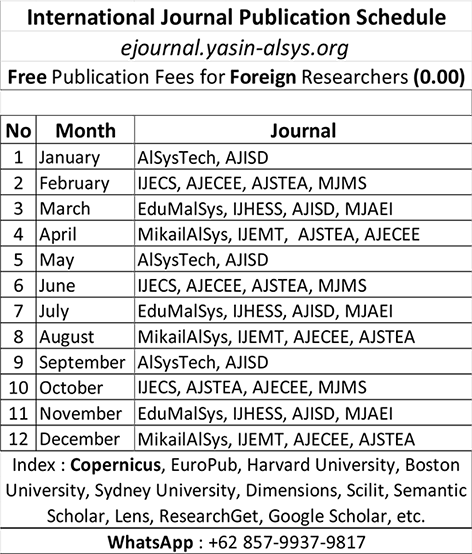
Explore Our Journals
Find the journal that best fits your research. If this journal does not match your manuscript’s scope, explore our portfolio below to select a more suitable publication venue.