
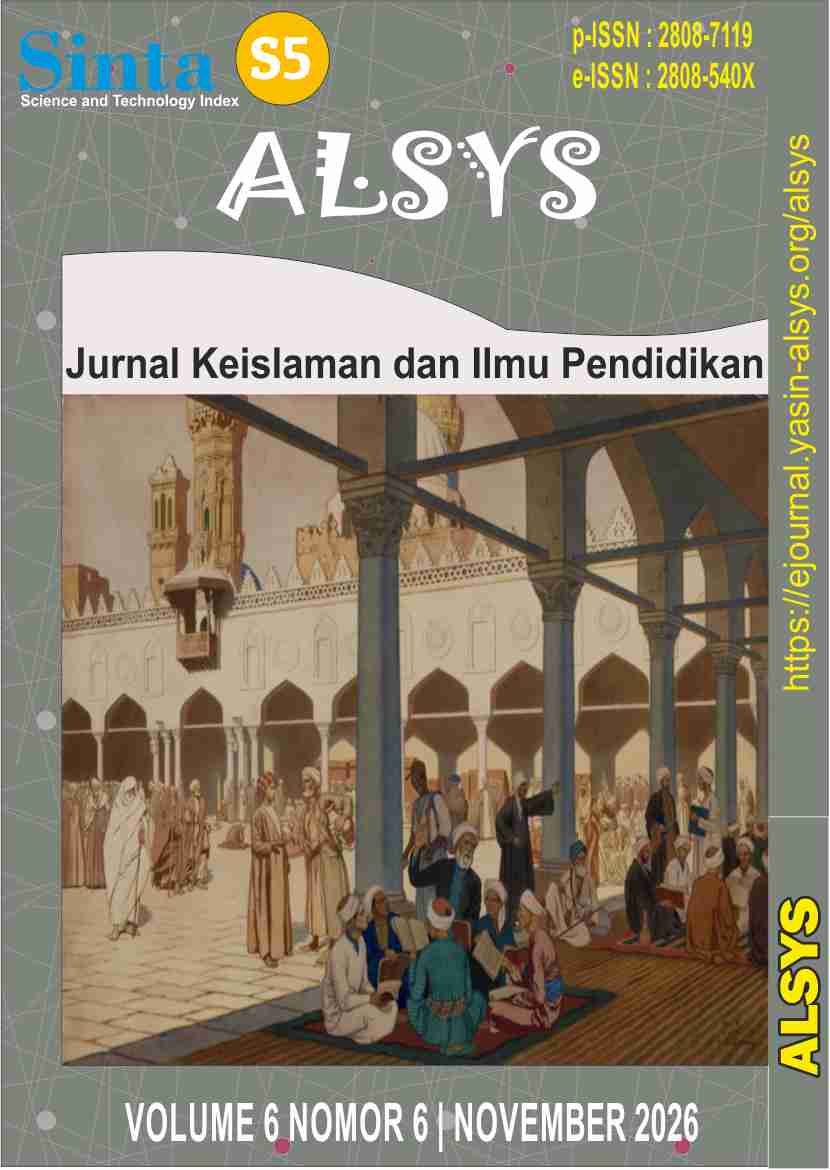
Sejarah Perkembangan Sains dan Teknologi dalam Peradaban Barat Modern: Analisis Komparatif Kontras Epistemologi Tradisi Islam dan Barat History of the Development of Science and Technology in Modern Western Civilization: A Comparative Analysis of Epistemological Contrasts between Islamic and Western Traditions
Main Article Content
Abstract
The development of modern Western science and technology has been widely studied from a historical perspective, but its relationship to epistemological differences between the Islamic and Western traditions still requires a more integrated analysis. This study aims to trace the development of modern Western science and technology and to compare the epistemologies of the two traditions in terms of their sources of knowledge, methods, and value orientations. The study used a qualitative literature review with a descriptive-comparative design. Classical works, academic books, and scholarly articles were purposively selected based on their relevance and authority. Data were collected through document review and analyzed using content analysis within a historical and comparative framework. The findings showed that the development of modern Western science has been marked by paradigm shifts from the Scientific Revolution to the era of artificial intelligence. Some Western epistemological approaches emphasize rationality and empirical verification, whereas the Islamic tradition links revelation, reason, and sensory experience to ethical responsibility. Reasoning and scientific observation provide common ground between the two traditions. At the conceptual level, this study clarifies the similarities and differences between the two traditions by linking methods of acquiring knowledge to philosophical assumptions and value orientations. The study also underscores the importance of developing science that is critical, responsible, and oriented toward human well-being.




Citation Metrics:




Downloads
Citation Metrics & Similar Scopus Articles
-
Zakwan F.A.A. (2026)Advancing accreditation and sustainable education goals through outcome attainment analysis: a case study of statics education in MalaysiaDiscover Education, 5(1)
-
Artarini A. (2027)Corrigendum to “Validation of SARS-CoV-2 neutralization assay using VSV-based pseudovirus system” [Anal. Biochem. (2026), 719, 116239] (Analytical Biochemistry (2026) 719, (S0003269726001958), (10.1016/j.ab.2026.116239))Analytical Biochemistry, 720
-
Zakaria Z.A. (2026)Correction : Toxicological evaluation and mycochemical characterisation of aqueous extract of Schizophyllum commune (Discover Food, (2026), 6, 1, (237), 10.1007/s44187-026-00941-w)Discover Food, 6(1)
Article Details

Authors retain copyright and grant the journal right of first publication with the work simultaneously licensed under a Creative Commons Attribution-NonCommercial-ShareAlike 4.0 International License that allows others to share the work with an acknowledgement of the work's authorship and initial publication in this journal.
References
Aji, R. M. H., Azuhra, F., & Hanifiyah, N. (2025). Epistemologi dalam Perspektif Islam dan Barat: Observasi, Eksperimen, dan Rasionalitas. Kreatif: Jurnal Pemikiran Pendidikan Agama Islam, 23(2), 224–234.
Al-Attas, S. M. N. (1980). The concept of education in Islam: A framework for an Islamic philosophy of education. Muslim Youth Movement of Malaysia (ABIM).
Al-Attas, S. M. N. (1993). Islam and secularism. International Institute of Islamic Thought and Civilization (ISTAC).
Bacon, F. (2000). The new organon (L. Jardine & M. Silverthorne, Eds.; M. Silverthorne, Trans.). Cambridge University Press. (Original work published 1620) https://www.cambridge.org/core/books/francis-bacon-the-new-organon/32B60B55E180FA6CD0CA896491F9ACA6
Darwin, C. (1859). On the origin of species by means of natural selection, or the preservation of favoured races in the struggle for life. John Murray.
Descartes, R. (1996). Meditations on first philosophy: With selections from the objections and replies (J. Cottingham, Ed. & Trans.). Cambridge University Press. https://doi.org/10.1017/CBO9780511805028
Firzatullah, M. A., Prayogi, A., Nashah, S. D., & Rosidah, N. (2026). The Islamization of science: The intellectual response of Indonesian Muslims to the integration of religion and science in the millennial era. Averroes: Journal for Science and Religious Studies, 3(1), 1–19. https://doi.org/10.62446/averroes.030101
Hafizh, M., Dina, S., Astuti, W., & Ningsih, N. W. (2023). Perbandingan Paradigma Epistemologi: Sumber Pengetahuan Perspektif Islam dan Barat. Risâlah Jurnal Pendidikan dan Studi Islam, 9(4), 1496–1509. https://jurnal.faiunwir.ac.id/index.php/Jurnal_Risalah/article/view/598
Hambali. (2017). Filsafat Ilmu Islam dan Barat. Alfabeta.
Hantoro, R. R. (2022). Klasifikasi Ilmu Pengetahuan Barat dan Islam serta Konstribusinya dalam Dunia Akademik. Tasamuh: Jurnal Studi Islam, 14(1), 90–114. https://doi.org/10.47945/tasamuh.v14i1.412
Harrison, P. (2015). The territories of science and religion. University of Chicago Press. https://doi.org/10.7208/chicago/9780226184517.001.0001
Heisenberg, W. (1958). Physics and philosophy: The revolution in modern science. Harper & Brothers.
Kuhn, T. S. (1962). The structure of scientific revolutions. University of Chicago Press.
Miao, F., & Holmes, W. (2023). Guidance for generative AI in education and research. UNESCO. https://www.unesco.org/en/articles/guidance-generative-ai-education-and-research
Nasr, S. H. (1968). The encounter of man and nature: The spiritual crisis of modern man. George Allen & Unwin.
Nurdiansyah, L., Febrialdo, R., Hariyadi, A., Wirawan, A., & Munir, M. M. (2026). Aksiologi dalam Perkembangan Ilmu Pengetahuan dan Teknologi: Perspektif Etika, Moral, dan Islam dalam Membangun Peradaban Humanis. Jurnal Keilmuan dan Keislaman, 5(2), 467–487. https://doi.org/10.23917/jkk.v5i2.1024
Purnamansyah, Isnaini, Kamalia, A. W., & Hisan, K. (2023). Konsep Ilmu Pengetahuan, Teknologi, dan Sains Ditinjau dari Perspektif Psikologi Islam Modern. DIKSI: Jurnal Kajian Pendidikan dan Sosial, 4(2), 64–76. https://doi.org/10.53299/diksi.v4i2.356
Saliba, G. (2007). Islamic science and the making of the European Renaissance. MIT Press. https://mitpress.mit.edu/9780262195577/islamic-science-and-the-making-of-the-european-renaissance/
Schwab, K. (2016). The fourth industrial revolution. World Economic Forum.
Soleh, A. K. (2018). Epistemologi Islam: Integrasi Agama, Filsafat, dan Sains dalam Perspektif al-Farabi dan Ibnu Rusyd. Ar-Ruzz Media. https://repository.uin-malang.ac.id/4519/
United Nations Educational, Scientific and Cultural Organization. (2021, November 23). Recommendation on the ethics of artificial intelligence. https://www.unesco.org/en/legal-affairs/recommendation-ethics-artificial-intelligence
Article Sidebar
 Page Numbers:
2924-2944
 Digital Object ID:












 Viewed: 26 times
 Downloaded: 13 times
LYAS Publisher cordially invites qualified professionals to serve as Editors or Reviewers. Your expertise will make an important contribution to maintaining and strengthening the academic quality of our publications. Interested applicants are kindly requested to complete the application form at the following link: Editors & Reviewers
Please feel free to contact us if you need any further information about the submission process or if you have any additional questions.

 Authors:
 Copyright :
Authors retain copyright and grant the journal right of first publication.
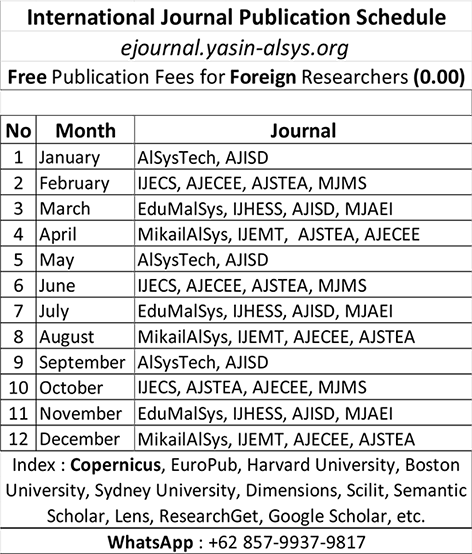
Explore Our Journals
Find the journal that best fits your research. If this journal does not match your manuscript’s scope, explore our portfolio below to select a more suitable publication venue.