
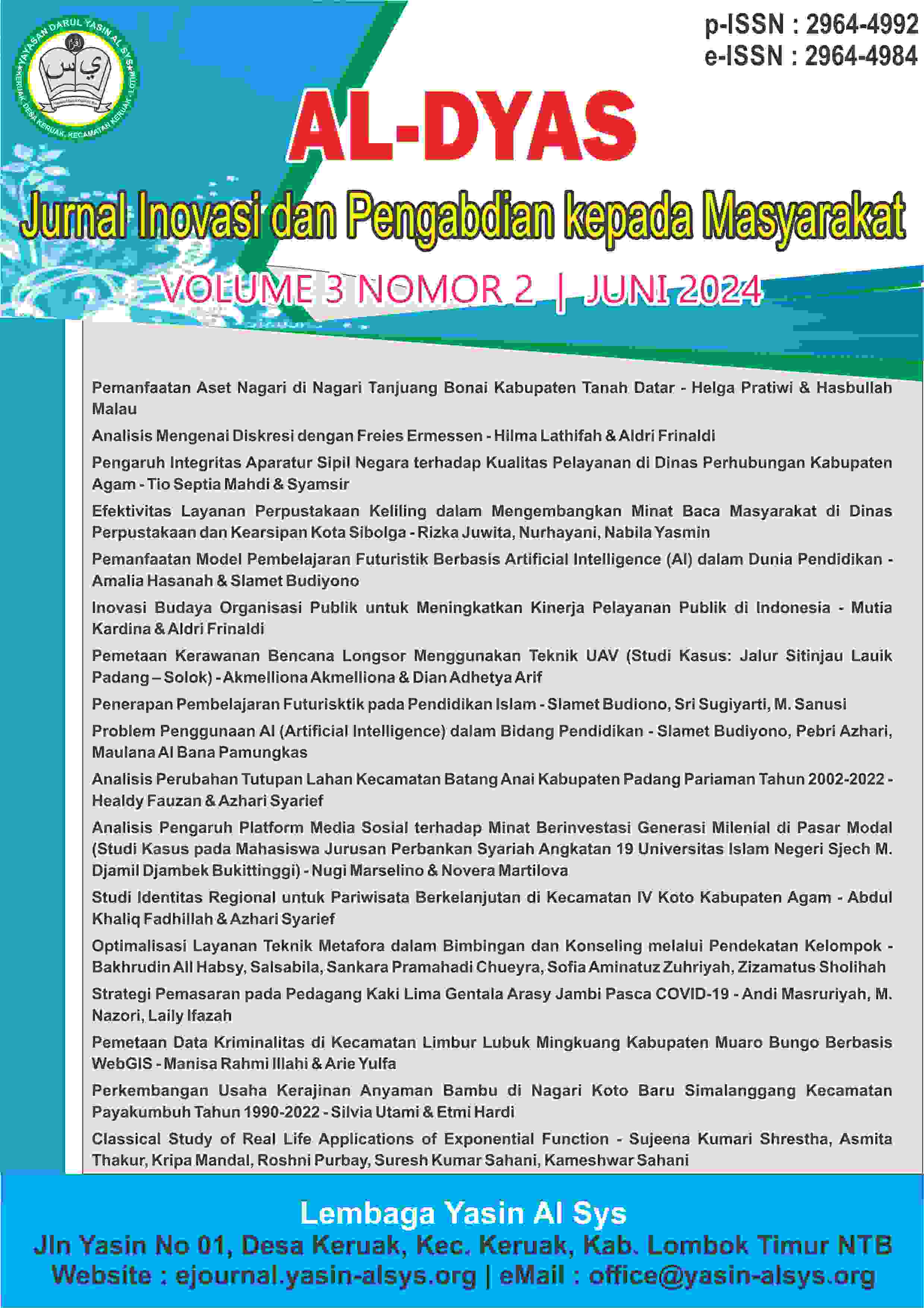
Classical Study of Real Life Applications of Exponential Function
Main Article Content
Abstract
One of the most prevalent applications of exponential function involves growth and decay modes. Exponential growth and decay show up in a host of applications. From population growth and continuously compounded interest to radioactive decay and Newton’s law of cooling exponential function are ubiquities in nature. In this section, we examine exponential growth and decay in the context of some of the application. In the preceding section, we examined a population growth problem in which the population grew at a fixed percentage each year. In that case, we found that the populations can be described by an exponential function. A similar analysis will show that any process in which a quality grows by a fixed percentage each year (or each day, hours, etc) can be modeled by an exponential function. Compound interest is a good example of such a process. Other applications of exponential function are bacterial growth, bacterial decay, population decline are obtained in this project (see [1-27])




Citation Metrics:




Downloads
Citation Metrics & Similar Scopus Articles
-
Kazhikenova S.S. (2028)Modelling and Solving Problems of Sustainable Efficiency of Technological Processes in MetallurgyKompleksnoe Ispolzovanie Mineralnogo Syra, 344(1), 65-78
-
Yerzhanova N.K. (2028)Application of bank protection structures for regulation of channel processes in the lower reaches of the Shu RiverKompleksnoe Ispolzovanie Mineralnogo Syra, 346(3), 5-18
-
Perezhogin V.Y. (2028)Image-Based FEM Modeling of the Stress State in Hypereutectic High-Chromium Cast IronsKompleksnoe Ispolzovanie Mineralnogo Syra, 346(3), 131-141
Article Details

Authors retain copyright and grant the journal right of first publication with the work simultaneously licensed under a Creative Commons Attribution-NonCommercial-ShareAlike 4.0 International License that allows others to share the work with an acknowledgement of the work's authorship and initial publication in this journal.
Article Sidebar
 Page Numbers:
779-789
Page Numbers:
779-789
 Digital Object ID:













 Viewed: 550 times
 Downloaded: 367 times

LYAS Publisher cordially invites qualified professionals to serve as Editors or Reviewers. Your expertise will make an important contribution to maintaining and strengthening the academic quality of our publications. Interested applicants are kindly requested to complete the application form at the following link: Editors & Reviewers


Please feel free to contact us if you need any further information about the submission process or if you have any additional questions.

 Authors:
 Copyright :
Authors retain copyright and grant the journal right of first publication.
Explore Our Journals
Find the journal that best fits your research. If this journal does not match your manuscript’s scope, explore our portfolio below to select a more suitable publication venue.