Perlindungan Hak Anak dari Dampak Kabut Asap Kebakaran Hutan dan Lahan (Karhutla) dalam Perspektif Hukum Keluarga Islam: Analisis Maqashid Syariah dan Hukum Positif Indonesia Protection of Children’s Rights from the Impacts of Haze Caused by Forest and Land Fires (Karhutla) from the Perspective of Islamic Family Law: Analysis of Maqashid Syariah and Indonesian Positive Law
Main Article Content
Abstract
Forest and land fires (karhutla) pose environmental and health risks that can hinder the fulfillment of children’s rights to health, safety, education, and a good and healthy environment. In 2026, Kementerian Kesehatan reported the effects of forest and land fires in seven provinces, including Kalimantan Barat, Kalimantan Tengah, Kalimantan Selatan, and Kalimantan Timur. As of 9 September 2026, ANTARA had reported 113,336 cases of acute respiratory infection (ARI), including 26,545 cases among children aged 0–5 years. These figures underscore the urgency of protecting children, while attributing individual cases of ARI to smoke from forest and land fires requires separate evidence. This study aimed to analyze how Indonesian positive law and Islamic family law protect children’s rights from the effects of smoke haze and to examine the relevance of maqāṣid al-syarī‘ah as a normative framework. This normative legal study used statutory and conceptual approaches. Legal materials were analyzed qualitatively through systematic interpretation and prescriptive reasoning. The findings affirmed parents’ caregiving obligations and the responsibilities of the state and other relevant parties to control fires and pollution. The principles of ḥifẓ al-nafs, ḥifẓ al-nasl, maṣlaḥah, and ḥifẓ al-bī’ah strengthen the normative basis for child protection. The study concludes that protecting children’s rights from the effects of smoke haze requires integrating caregiving, health services, access to air quality information, prevention of forest and land fires, and enforcement of environmental law.




Citation Metrics:




Downloads
Citation Metrics & Similar Scopus Articles
-
Telomere-to-telomere haplotype-resolved genome assembly of a female oyster pompano (Trachinotus anak)Scientific Data, 13(1)
-
Adult accounts of conditions sustaining dolanan anak across school and family contexts in YogyakartaDiscover Education, 5(1)
-
Evaluation of the predictive value of scoring systems in diagnosis of acute appendicitis: a comparative prospective studyLangenbeck S Archives of Surgery, 411(1)
Article Details

Authors retain copyright and grant the journal right of first publication with the work simultaneously licensed under a Creative Commons Attribution-NonCommercial-ShareAlike 4.0 International License that allows others to share the work with an acknowledgement of the work's authorship and initial publication in this journal.
References
Aditama, T. Y. (2000). Impact of haze from forest fire to respiratory health: Indonesian experience. Respirology, 5(2), 169–174. https://onlinelibrary.wiley.com/doi/abs/10.1046/j.1440-1843.2000.00246.x
Alicia, F. R. (2024). Implementation of environmental pollution and damage prevention instruments in Indonesia: Issues and challenges. Indonesian Journal of Environmental Law and Sustainable Development, 3(1), 125–156. https://doi.org/10.15294/ijel.v3i1.40210
Al-Syatibi. (1997). Al-Muwafaqat (M. H. Āl Salmān, Ed.). Dar Ibn ‘Affan.
Andriansyah, Sunaryo, & Garadian, E. A. (2026). Institutionalising ḥifẓ al-bī’ah as maqāṣid al-sharī‘ah in environmental governance. Asy-Syari’ah, 28(1), 75–100. https://doi.org/10.15575/as.v28i1.54800
Auda, J. (2008). Maqasid al-shariah as philosophy of Islamic law: A systems approach. International Institute of Islamic Thought.
Committee on the Rights of the Child. (2023, August 22). General comment No. 26 (2023) on children’s rights and the environment, with a special focus on climate change (CRC/C/GC/26). United Nations. https://digitallibrary.un.org/record/4019010/files/CRC_C_GC_26-EN.pdf
Convention on the Rights of the Child, November 20, 1989, 1577 U.N.T.S. 3. https://treaties.un.org/Pages/showDetails.aspx?objid=08000002800007fe
Eril, A., Hayyul, H., & Kurniati. (2026). Rekonstruksi Maqasid al-Syariah dalam Penanggulangan Deforestasi dan Kebakaran Hutan di Indonesia: Perspektif Hifz al-Bi’ah sebagai Etika Ekologis Islam. Eksekusi: Jurnal Ilmu Hukum dan Administrasi Negara, 4(1), 1–8. https://doi.org/10.55606/eksekusi.v4i1.2284
Ezra, T. B., & Dewi, C. T. I. (2024). Protecting Indonesian children in adapting climate change based on business and human rights principles. Padjadjaran Journal of International Law, 8(1), 34–48. https://doi.org/10.23920/pjil.v8i1.1606
Haryanto, B., Kurniasari, F., Trihandini, I., Nugraha, F., Widayana, N. G., & Winarni, N. L. (2026). Climate change adaptation to smoke haze for improved child health in Southeast Asia: Analysis situation in Palembang, Indonesia. Annals of Global Health, 92(1), Article 52.
Hein, L., Spadaro, J. V., Ostro, B., Hammer, M., Sumarga, E., Salmayenti, R., Boer, R., Tata, H., Atmoko, D., & Castañeda, J.-P. (2022). The health impacts of Indonesian peatland fires. Environmental Health, 21, Article 62. https://doi.org/10.1186/s12940-022-00872-w
Holm, S. M., Miller, M. D., & Balmes, J. R. (2021). Health effects of wildfire smoke in children and public health tools: A narrative review. Journal of Exposure Science & Environmental Epidemiology, 31, 1–20. https://www.nature.com/articles/s41370-020-00267-4
Ibn Ashur, M. al-T. (2006). Treatise on maqasid al-shari‘ah (M. E.-T. El-Mesawi, Trans.). International Institute of Islamic Thought.
Kansil, C. S. T., et al. (2007). Pokok-Pokok Pengetahuan Hukum Dagang Indonesia. Sinar Grafika.
Kementerian Kesehatan Republik Indonesia. (2026a, August 21). Antisipasi Dampak Karhutla, Kemenkes Kerahkan Nakes dan Logistik ke 7 Provinsi. https://www.kemkes.go.id/id/antisipasi-dampak-karhutla-kemenkes-kerahkan-nakes-dan-logistik-ke-7-provinsi
Kementerian Kesehatan Republik Indonesia. (2026b, August 26). Kemenkes Perkuat Perlindungan Kelompok Rentan Hadapi Karhutla.
Khuluq, M. K., & Asmuni. (2025). Hifz al-bi’ah as part of maqashid al-shari’ah and its relevance in the context of global climate change. Indonesian Journal of Interdisciplinary Islamic Studies, 7(2), 161–178.
Makraja, F., & Ramlah. (2025). Implementation of environmental fiqh in Indonesia from the perspective of maqāṣid as-syarī’ah Jasser Auda. Hukum Islam, 24(2), 277–288. https://doi.org/10.24014/hi.v24i2.31378
Oktaflifdhon, A. (2026). Pendekatan Maqashid Syariah dalam Perlindungan Hak Anak: Analisis Pemikiran Jasser Auda. Asasi: Journal of Islamic Family Law, 6(2), 247–261. https://ejournal.iaimu.org/index.php/asasi/article/view/235
Prasetyo, M. R. B. E. (2026, September 10). Kemenkes Catat 113 Ribu Kasus ISPA akibat Karhutla di Tujuh Provinsi. ANTARA News. https://www.antaranews.com/berita/5735276/kemenkes-catat-113-ribu-kasus-ispa-akibat-karhutla-di-tujuh-provinsi
Syahrial, M. A. (2024). Kejahatan Lingkungan dalam Tinjauan Hukum Pidana Islam dan Nasional: Relevansi Konsep Hifdzul Bi’ah dalam Penanggulangan Pembakaran Liar. Jurnal Al-Jina’i Al-Islami, 1(2), 97–111.
Syed, A., & Basu, R. (2025). The effect of wildfire smoke on children’s health: A systematic review. Paediatric and Perinatal Epidemiology, 39(1), 110–119. https://doi.org/10.1111/ppe.13141
Uda, S. K., Hein, L., & Atmoko, D. (2019). Assessing the health impacts of peatland fires: A case study for Central Kalimantan, Indonesia. Environmental Science and Pollution Research, 26(30), 31315–31327. https://doi.org/10.1007/s11356-019-06264-x
Undang-Undang Republik Indonesia Nomor 1 Tahun 1974 tentang Perkawinan. (1974). https://peraturan.bpk.go.id/Details/47406/uu-no-1-tahun-1974
Undang-Undang Republik Indonesia Nomor 32 Tahun 2009 tentang Perlindungan dan Pengelolaan Lingkungan Hidup. (2009). https://peraturan.bpk.go.id/details/38771/uu-no-32-tahun-2009
UNICEF. (2024a). Clean air, healthy children: An agenda for action. https://www.unicef.org/reports/clean-air-healthy-children-agenda-action
UNICEF. (2024b). Safe from wildfire smoke. https://www.unicef.org/documents/safe-from-wildfire-smoke
World Health Organization. (2021). WHO global air quality guidelines: Particulate matter (PM₂.₅ and PM₁₀), ozone, nitrogen dioxide, sulfur dioxide and carbon monoxide. https://www.who.int/publications/i/item/9789240034228
Yafie, A. (2006). Merintis Fiqh Lingkungan Hidup. Yayasan Amanah.
Zhang, Y., Ye, T., Huang, W., Yu, P., Chen, G., Xu, R., Song, J., Guo, Y., & Li, S. (2024). Health impacts of wildfire smoke on children and adolescents: A systematic review and meta-analysis. Current Environmental Health Reports, 11(1), 46–60. https://doi.org/10.1007/s40572-023-00420-9
Article Sidebar
 Page Numbers:
5009-5030
 Digital Object ID:













 Viewed: 17 times
 Downloaded: 8 times

LYAS Publisher cordially invites qualified professionals to serve as Editors or Reviewers. Your expertise will make an important contribution to maintaining and strengthening the academic quality of our publications. Interested applicants are kindly requested to complete the application form at the following link: Editors & Reviewers
Please feel free to contact us if you need any further information about the submission process or if you have any additional questions.

 Authors:
 Copyright :
Authors retain copyright and grant the journal right of first publication.
Explore Our Journals
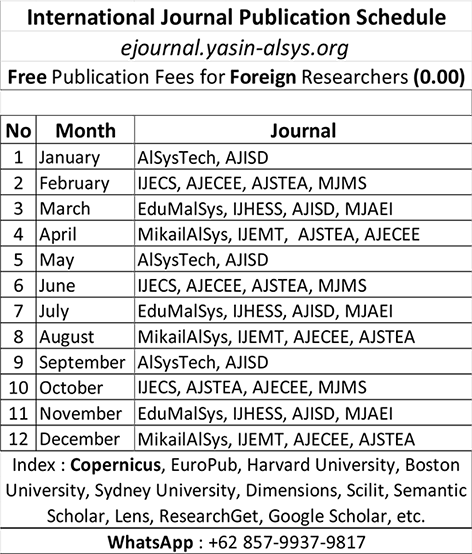
Find the journal that best fits your research. If this journal does not match your manuscript’s scope, explore our portfolio below to select a more suitable publication venue.