
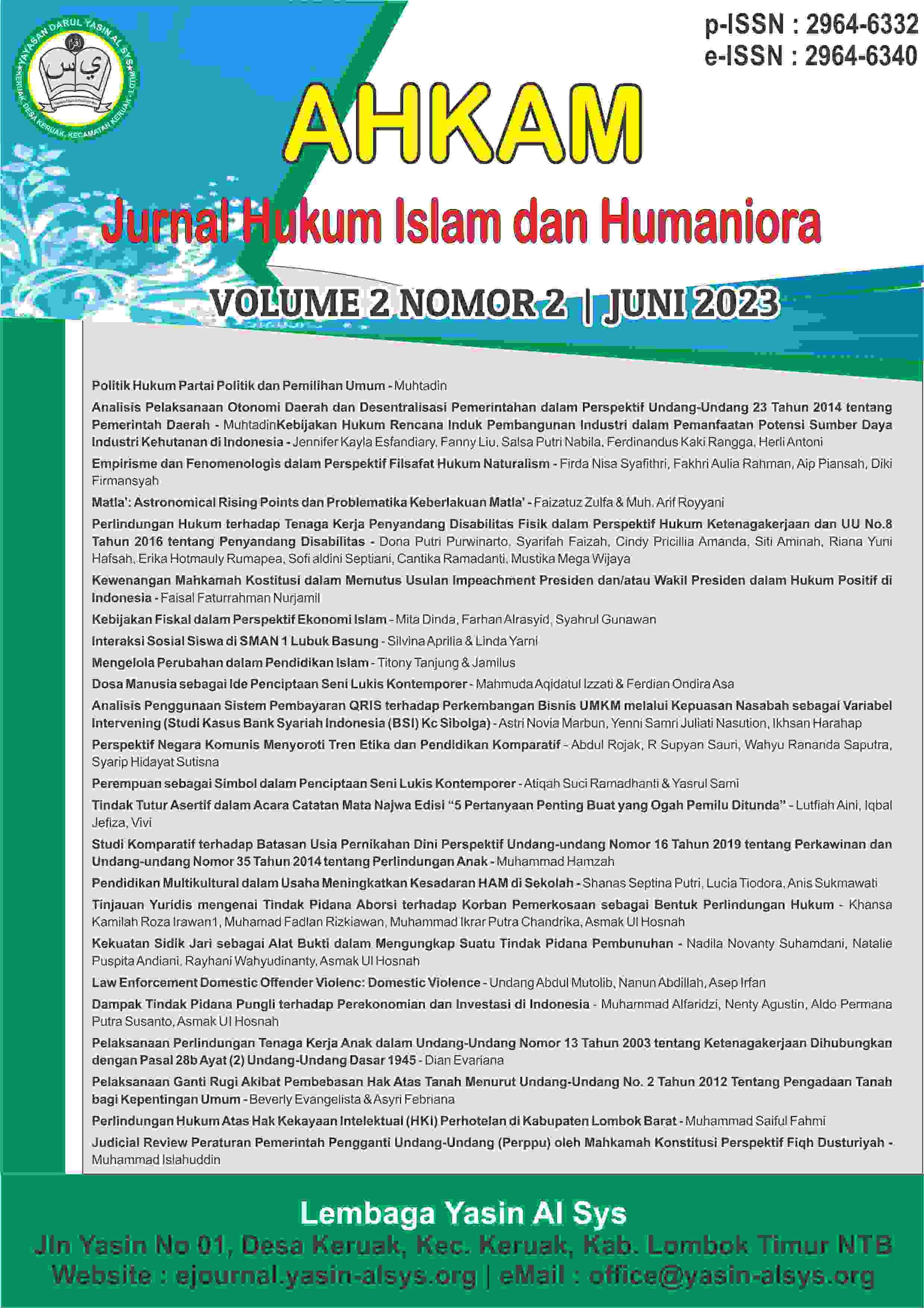
Tindak Tutur Asertif dalam Acara Catatan Mata Najwa Edisi “5 Pertanyaan Penting Buat yang Ogah Pemilu Ditunda”
Main Article Content
Abstract
Research on assertive speech acts is very important to study because speech is not just delivery. However, in the speech there is a purpose and purpose to be conveyed. This study aims to provide an overview to the reader so that they know assertive speech acts in the form of stating, reporting, and affirming in the responses of informants in the Mata Najwa program 5th edition of Important Questions for Those of You who are Averse to Postponed Elections. Assertive speech acts are speech acts that make the speaker become attached to the truth spoken. Types of assertive speech acts include explaining, stating, suggesting, showing and reporting. The type of research that the author uses is descriptive qualitative. This research was conducted in Mata Najwa's Notes edition 5 Important Questions for those of you who are averse to Postponed Elections. The data collection technique was carried out using recording, listening, and note-taking techniques. Data analysis used the matching method using referential sorting echnique. From the results of this study, assertive speech acts were obtained in the form of: stating, reporting, and affirming. Based on these results, obtained 17 forms of assertive speech acts, namely 7 assertive speech acts stating, 8 assertive speech acts reporting, and 2 asserting assertive speech acts.




Citation Metrics:




Downloads
Citation Metrics & Similar Scopus Articles
-
Lin X. (2027)Capacity Degradation Mechanisms, Recovery Strategies, and Challenges of Flow BatteriesNano Micro Letters, 19(1)
-
Wu Y. (2027)Strategies of Designing High-Efficiency Electrolyte Additives for Aqueous Magnesium Batteries: A ReviewNano Micro Letters, 19(1)
-
Lee H. (2027)Low-Temperature All-Solid-State BatteriesNano Micro Letters, 19(1)
Article Details

Authors retain copyright and grant the journal right of first publication with the work simultaneously licensed under a Creative Commons Attribution-NonCommercial-ShareAlike 4.0 International License that allows others to share the work with an acknowledgement of the work's authorship and initial publication in this journal.
References
Pradita, S. R. (2015). Tindak Tutur Asertif dalam Acara “dr. Oz Indonesia” di Trans TV.
Rahardi, R. K. (2005). Pragmatik: kesantunan imperatif bahasa Indonesia. Erlangga.
Rahma, A. N. (2018). Analisis tindak tutur ilokusi dalam dialog film animasi meraih mimpi. Jurnal Surabaya: Skriptorium, 2(2), 13-24.
Safriani, N., Mahmud, S., & Iqbal, M. (2018). Tindak Tutur Asertif Dalam Novel Perempuan Terpasung Karya Hani Naqshabandi.JIM Pendididikan Bahasa dan Sastra Indonesia, 3(1), 67-77.
Sulistyo, E. T. (2013). Pragmatik suatu kajian awal.
Suryanti, S. P. (2020). PRAGMATIK. Penerbit Lakeisha.
Stambo, R., & Ramadhan, S. (2019). Tindak tutur ilokusi pendakwah dalam program damai indonesiaku di TV One. BASINDO: jurnal kajian bahasa, sastra Indonesia, dan pembelajarannya, 3(2), 250-260.
Yuliarti, Y., Rustono, R., & Nuryatin, A. (2015). Tindak tutur direktif dalam wacana novel trilogi karya Agustinus Wibowo. Seloka: Jurnal Pendidikan Bahasa Dan Sastra Indonesia, 4(2).
Article Sidebar
 Page Numbers:
394-409
Page Numbers:
394-409
 Digital Object ID:













 Viewed: 753 times
 Downloaded: 390 times

LYAS Publisher cordially invites qualified professionals to serve as Editors or Reviewers. Your expertise will make an important contribution to maintaining and strengthening the academic quality of our publications. Interested applicants are kindly requested to complete the application form at the following link: Editors & Reviewers


Please feel free to contact us if you need any further information about the submission process or if you have any additional questions.

 Authors:
 Copyright :
Authors retain copyright and grant the journal right of first publication.
Explore Our Journals
Find the journal that best fits your research. If this journal does not match your manuscript’s scope, explore our portfolio below to select a more suitable publication venue.