
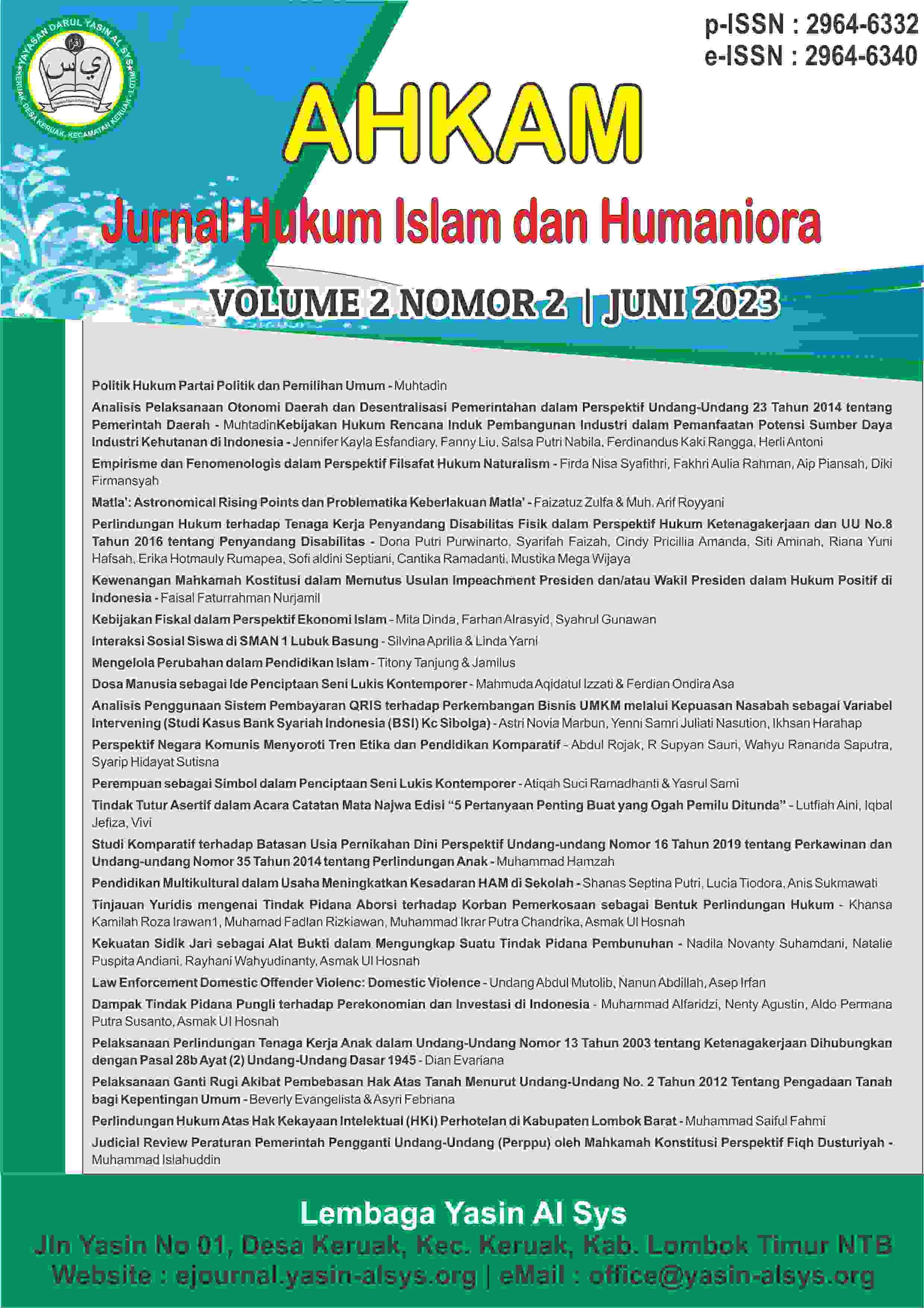
Mengelola Perubahan dalam Pendidikan Islam
Main Article Content
Abstract
Managing change in Islamic education is essential to ensure religious education is relevant, effective, and meets the needs of the times. Here are some steps that can be taken to manage change in Islamic education. Needs analysis, stakeholder engagement, curriculum renewal, professional development, use of technology, evaluation and assessment, inter-agency collaboration, effective communication, and openness to change. In this study, we used a type/research approach in the form of library research. Researchers use descriptive research methods because they are in accordance with the problems studied. the rapid development of the times, especially in the field of education, takes place continuously so that it is inevitable that the education system in the future will experience changes. This shows that change is critical to managing Islamic education because educational attainment is always changing and is not limited by time or geography.




Citation Metrics:




Downloads
Citation Metrics & Similar Scopus Articles
-
Ding S. (2027)Digital Renewal of University Education: Barriers, Opportunities, and Contributions to Sustainable Development Goals (SDGs)Asean Journal of Educational Research and Technology, 6(2), 229-240
-
Trisnowati E. (2027)Science, Technology, Engineering, and Mathematics (STEM) and Research Skill Development (RSD) in Science Education in Higher Education: A Delphi-Based ModelAsean Journal of Educational Research and Technology, 6(2), 253-268
-
Unyaphatariyakool S. (2027)Science Teachers’ Learning Management Competency through Professional Learning Communities to Promote Scientific Creativity and Sustainable Development Goals (SDGs)Asean Journal of Educational Research and Technology, 6(2), 241-252
Article Details

Authors retain copyright and grant the journal right of first publication with the work simultaneously licensed under a Creative Commons Attribution-NonCommercial-ShareAlike 4.0 International License that allows others to share the work with an acknowledgement of the work's authorship and initial publication in this journal.
References
Achmadi. (1992). Islam sebagai Paradigma Ilmu Pendidikan. Aditya Media.
An-Nahlawy, A. (1995). . Pendidikan Islam di Sumah, Sekolah dan Masyarakat, (terj) shihabuddin. Gema Insani Press.
Asmendri, dan F. (2015). Perencanaan Pendidikan: Teori, Aplikasi Dan Riset. Linggar Media.
Daradjat, Z. (2009). Ilmu Pendidikan Islam. Bumi Aksara.
Darminta, P. (2005). Kamus Besar Bahasa Indonesia. Tiara Wacana Yogya.
Daulay, H. P. (2007). Sejarah Pertumbuhan dan Pemabaharuan Pendidikan Islam di Indonesia. Kencana Prenada Media Group.
Driyarkara. (1980). Tentang Pendidikan. Kanisius.
Frank M. Gryna, Richard C.H. Chua, dan J. A. D. (2007). Juran’s Quality Planning and Analysis. Mc Graw Hill.
Hamalik, O. (2010). Manajemen Pengembangan Kurikulum. Remaja Rosdakarya.
Hartono, D. (2014). Pengembangan Manajemen Pondok Pesantren Di Era Globalisasi. Ponpes Jagad Alimussirry.
Idris, Z. (1987). Dasar-dasar Kependidikan. Angkasa Raya.
Maskuroh, N. (2017). Gerakan Pembaruan dalam Islam. Teras.
Mestika Zed. (2004). Metode Penelitian Kepustakaan. Yayasan Obor Nasional.
Nasution, H. (1996). Islam Rasional :Gagasan dan Pemikiran. Mizan.
Nizar, S. (2007). Sejarah Pendidikan Islam. Prenada Media Group.
Priyatna, M. (2017). Manajemen pengembangan sdm pada lembaga pendidikan Islam. Edukasi Islami. Jurnal Pendidikan Islam, 5, 21.
Qomar, M. (2007). Manajemen Pendidikan Islam strategi baru pengelolaan lembaga Pendidikan Islam. Erlangga.
Rusn, A. I. (1998). Pemikiran al-Ghazali Tentang Pendidikan. Pustaka Belajar.
Zulkarnain. (2008). Tranformasi nilai-nilai Pendidikan Islam; Manajemen Berorientasi Link dan Match. Pustaka Pelajar.
Article Sidebar
 Page Numbers:
335-348
Page Numbers:
335-348
 Digital Object ID:













 Viewed: 465 times
 Downloaded: 778 times

LYAS Publisher cordially invites qualified professionals to serve as Editors or Reviewers. Your expertise will make an important contribution to maintaining and strengthening the academic quality of our publications. Interested applicants are kindly requested to complete the application form at the following link: Editors & Reviewers


Please feel free to contact us if you need any further information about the submission process or if you have any additional questions.

 Authors:
 Copyright :
Authors retain copyright and grant the journal right of first publication.
Explore Our Journals
Find the journal that best fits your research. If this journal does not match your manuscript’s scope, explore our portfolio below to select a more suitable publication venue.