
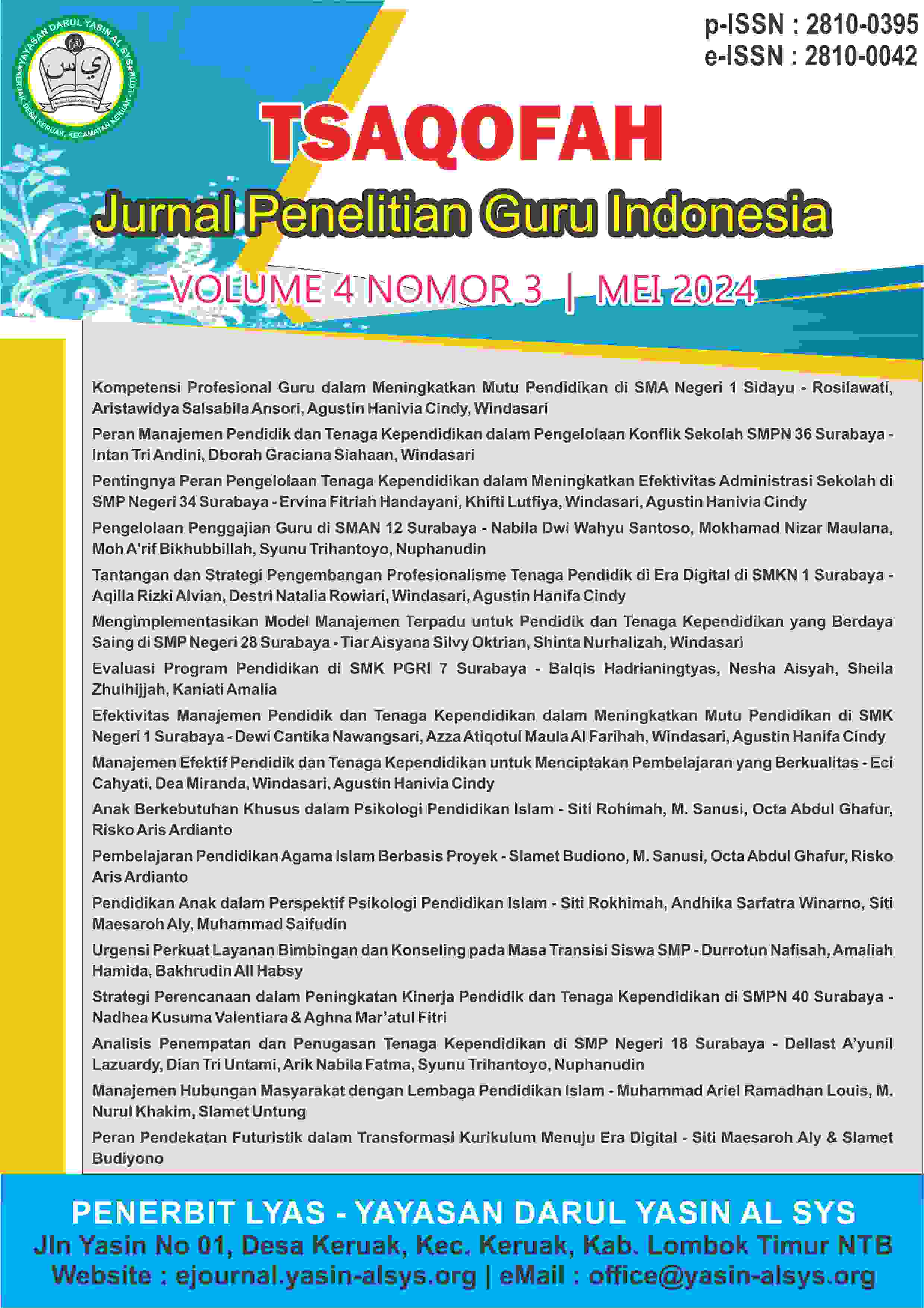
Pembelajaran Pendidikan Agama Islam Berbasis Proyek Project-Based Learning in Islamic Religious Education

Main Article Content
Abstract
The project method is a way of teaching that provides students with the opportunity to use daily life units as learning material and aims to make students interested in learning. The project learning method is a teaching and learning activity whose process is based on inquiry. In this learning, the focus is on complex questions and problems. Then answer questions or solve problems through an investigative process carried out collaboratively over time. Most projects are carried out by investigating authentic issues and topics found outside of school. During the inquiry process, students learn the content, information and facts needed to draw conclusions from each question. During the process students also learn valuable skills and thinking habits. The project-based learning method is a learning method that uses problems as the first step in collecting and integrating new knowledge based on experience in real activities. Then the problem is solved in groups. In this learning, students are able to find their own solutions to the products/tasks given. Project-based learning methods can increase students' learning motivation in Islamic religious education, project-based learning methods can facilitate more active learning experiences.




Citation Metrics:




Downloads
Citation Metrics & Similar Scopus Articles
-
Ratnaningsih E. (2027)Designing a Data-Driven E-Learning Module for Teaching English to Young Learners: Integrating Needs Analysis and the ISAV Learning ModelAsean Journal of Educational Research and Technology, 6(2), 269-286
-
Unyaphatariyakool S. (2027)Science Teachers’ Learning Management Competency through Professional Learning Communities to Promote Scientific Creativity and Sustainable Development Goals (SDGs)Asean Journal of Educational Research and Technology, 6(2), 241-252
-
Azhand A. (2027)Teaching Persian derivational affixes to non-Persian speakers from a Cognitive Morphology Approach: A case study of nominal suffixes (kar, gar, ban, baz, -ande)Language Related Research, 17(4), 469-497
Article Details

Authors retain copyright and grant the journal right of first publication with the work simultaneously licensed under a Creative Commons Attribution-NonCommercial-ShareAlike 4.0 International License that allows others to share the work with an acknowledgement of the work's authorship and initial publication in this journal.
References
Anjarwati, F. D., & Utami, R. R. (2021). Relevansi Nilai Moral Religiusitas Serat Yusuf Terhadap Era Disruptif. Kejawen, 1(2): 84-99.
Atin Risnawati & Dian Eka Priyantoro. (2021). Pentingnya Penanaman Nilai-Nilai Agama Pada Pendidikan Anak Usia Dini Dalam Perspektif Al-Quran. as-sibyan : Jurnal Pendidikan Anak Usia Dini, Vol 6 No 1.
Gunarto.(2013). Model dan Metode Pembelajaran di Sekolah. In Unissula Press. Vol. 180, Issue 1
Halik, A. (2012). Metode Pembelajaran: Perspektif Pendidikan Islam. Jurnal Al-‘Ibrah, I(1): 46
Lion, E., Ludang, Y., & Jaya, H. P. (2022). Edukasi Penerapan Pembelajaran Project Based Learning Untuk Meningkatkan Hasil Belajar Di Masa Pandemi COVID-19 Desa Telangkah. J-Abdi: Jurnal Pengabdian Kepada Masyarakat, 2(1): 3635–3642.
Melfianora. (2019). Penulisan Karya Tulis Ilmiah dengan Studi Literatur. Open Science Framework: 1–3.
Murniarti, E. (2017). Penerapan Metode Project Based Learning. Journal of Education, 3(2): 369–380.
Purnawanto, A. T. (2019). Penerapan Metode Proyek Dalam Pembelajaran PAI. Jurnal Ilmiah Pedagogy, 14(1): 1–11.
Purnomo, H., & Ilyas, Y. (2019). Tutorial Pembelajaran. K-Media
Ramadayanti, N., Muderawan, I. W., & Tika, I, N. (2016). Pengaruh Model Pembelajaran Berbasis Proyek Terhadap Keterampilan Berpikir Kritis Dan Prestasi Belajar Siswa. Prosiding Seminar Nasional MIPA, 3(2): 194–204.
Ramayulis. (2005). Metodologi Pendidikan Agama Islam, Jakarta, Kalam Mulia
Suryana, Ms. (2012). Metodologi Penelitian: Metodologi Penelitian Model Prakatis Penelitian Kuantitatif dan Kualitatif. Bandung: Universitas Pendidikan Indonesia
Article Sidebar
 Page Numbers:
1534-1544
Page Numbers:
1534-1544
 Digital Object Identifier:













 Viewed: 1.719 times
 Downloaded: 866 times

LYAS Publisher cordially invites qualified professionals to serve as Editors or Reviewers. Your expertise will make an important contribution to maintaining and strengthening the academic quality of our publications. Interested applicants are kindly requested to complete the application form at the following link: Editors & Reviewers


Please feel free to contact us if you need any further information about the submission process or if you have any additional questions.

 Authors:
Slamet Budiono1, M. Sanusi2, Octa Abdul Ghafur3, Risko Aris Ardianto4
 Copyright :
Authors retain copyright and grant the journal right of first publication.
Explore Our Journals
Find the journal that best fits your research. If this journal does not match your manuscript’s scope, explore our portfolio below to select a more suitable publication venue.