
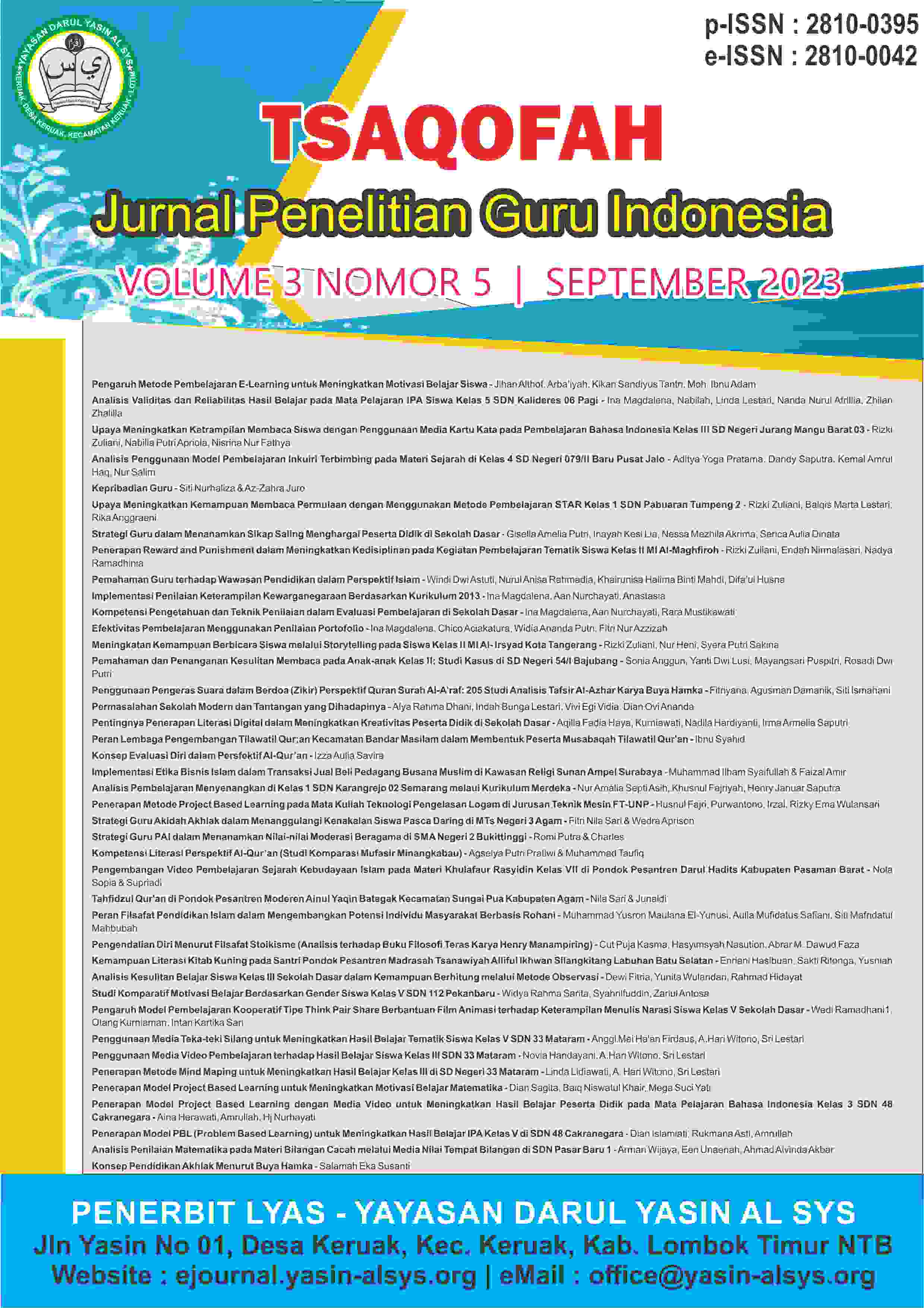
Penerapan Metode Project Based Learning pada Mata Kuliah Teknologi Pengelasan Logam di Jurusan Teknik Mesin FT-UNP

Main Article Content
Abstract
Learning as a learning process built by lecturers to develop creative thinking that can improve students' thinking skills. Project-based learning is a teaching and learning strategy that involves students to work on a project that is useful for solving community or environmental problems. The type of research used is research in the form of classroom action research. However, according to researchers, classroom teaching is not only in a room, but a group of students who are learning. This classroom action research can be done not only in the classroom, but anywhere, as long as there is a group of students who are learning. This study aims to see the results of the application of Project-based learning in Welding Technology Subjects with 29 students of the Department of Mechanical Engineering FT-UNP. The aspects seen in the observation results are visual, oral, listening, writing, monotoric, mental, emotional activities. Aspects seen in student learning outcomes include: project worksheets and assessment sheets. The results of the recapitulation of observation of activeness in Cycle I averaged 60.16% and the percentage of activeness in Cycle II averaged 80.56%. The overall average liveliness between cycles is 70.4% and learning outcomes are 79.65%. Based on the results of classroom action research that has been carried out in 2 (two) cycles in this study, it can be concluded that the application of the project-based learning model can improve learning activeness and learning outcomes of Welding Technology courses of Mechanical Engineering Department Students FT-UNP.




Citation Metrics:



Downloads
Citation Metrics & Similar Scopus Articles
-
Achilova S.S. (2027)Activation of the mineralized mass of Central Kyzylkum using acidic wastewater from the oil and fat industry: Freundlich-based adsorption kinetics for fluorine releaseKompleksnoe Ispolzovanie Mineralnogo Syra, 342(3), 65-79
-
Fazilova M.K. (2028)Physicochemical and commercial properties of a microelement-containing nitrogen fertilizer based on ammonium nitrate and spent lithium-ion batteriesKompleksnoe Ispolzovanie Mineralnogo Syra, 346(3), 52-63
-
Sharopov K. (2028)Assessment of the mineral composition, microstructure, and energy properties of the sample from the Shargun coal field based on instrumental analysis methodsKompleksnoe Ispolzovanie Mineralnogo Syra, 344(1), 90-98
Article Details

Authors retain copyright and grant the journal right of first publication with the work simultaneously licensed under a Creative Commons Attribution-NonCommercial-ShareAlike 4.0 International License that allows others to share the work with an acknowledgement of the work's authorship and initial publication in this journal.
Article Sidebar
 Page Numbers:
908-920
Page Numbers:
908-920
 Digital Object ID:













 Viewed: 690 times
 Downloaded: 454 times
LYAS Publisher cordially invites qualified professionals to serve as Editors or Reviewers. Your expertise will make an important contribution to maintaining and strengthening the academic quality of our publications. Interested applicants are kindly requested to complete the application form at the following link: Editors & Reviewers


Please feel free to contact us if you need any further information about the submission process or if you have any additional questions.

 Authors:
Husnul Fajri1, Purwantono Purwantono2, Irzal Irzal3, Rizky Ema Wulansari4
 Copyright :
Authors retain copyright and grant the journal right of first publication.
Explore Our Journals
Find the journal that best fits your research. If this journal does not match your manuscript’s scope, explore our portfolio below to select a more suitable publication venue.