
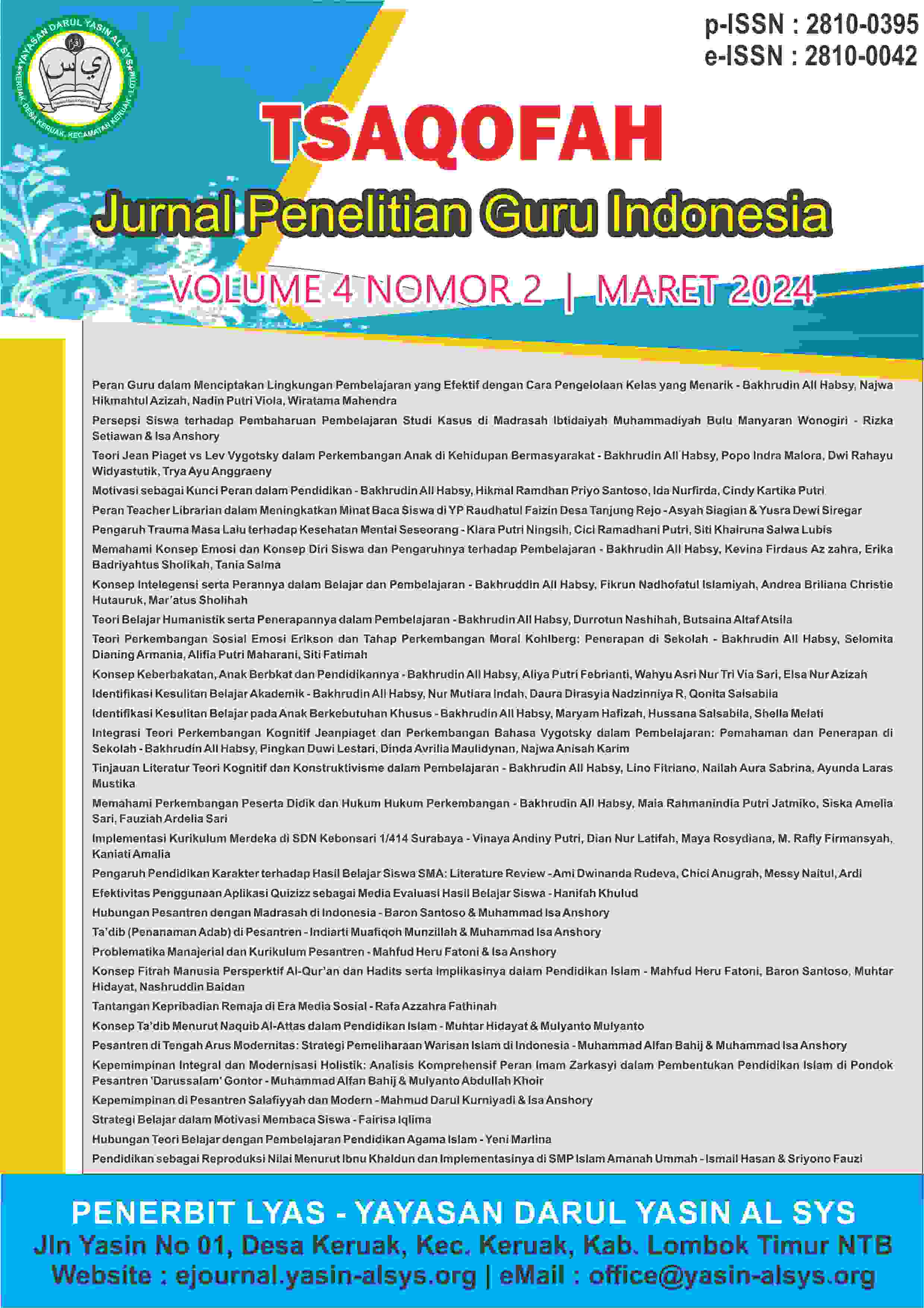
Strategi Belajar dalam Motivasi Membaca Siswa Learning Strategies in Motivating Students to Read
Main Article Content
Abstract
In Indonesia, there are still many people who read minimally. There are several factors that cause the lack of reading in Indonesia. The purpose of this research is to analyze the influence of reading interest on learning outcomes, analyze the influence of learning motivation on learning outcomes, and analyze the influence of reading interest and learning motivation on student learning outcomes. Reading activities among school students are still not optimal, students' reading enthusiasm is still very low. Teachers' awareness of students' reading motivation is also still low. This type of research uses qualitative, this research uses research analysis techniques and case studies in journals. It cannot be denied that low interest in reading is a problem that deserves attention. To overcome this problem, we must be able to do something simple by realizing that reading is very important, and we must also implement our reading culture.




Citation Metrics:



Downloads
Citation Metrics & Similar Scopus Articles
-
Naemi Z. (2027)The Relationship between Second Language Learning Strategies, Learning Engagement, and Writing Skill in the Arabic Writing CurriculumLanguage Related Research, 17(4), 331-360
-
Wu Y. (2027)Strategies of Designing High-Efficiency Electrolyte Additives for Aqueous Magnesium Batteries: A ReviewNano Micro Letters, 19(1)
-
Lin X. (2027)Capacity Degradation Mechanisms, Recovery Strategies, and Challenges of Flow BatteriesNano Micro Letters, 19(1)
Article Details

Authors retain copyright and grant the journal right of first publication with the work simultaneously licensed under a Creative Commons Attribution-NonCommercial-ShareAlike 4.0 International License that allows others to share the work with an acknowledgement of the work's authorship and initial publication in this journal.
Article Sidebar
 Page Numbers:
917-922
Page Numbers:
917-922
 Digital Object ID:













 Viewed: 346 times
 Downloaded: 424 times
LYAS Publisher cordially invites qualified professionals to serve as Editors or Reviewers. Your expertise will make an important contribution to maintaining and strengthening the academic quality of our publications. Interested applicants are kindly requested to complete the application form at the following link: Editors & Reviewers


Please feel free to contact us if you need any further information about the submission process or if you have any additional questions.

 Authors:
 Copyright :
Authors retain copyright and grant the journal right of first publication.
Explore Our Journals
Find the journal that best fits your research. If this journal does not match your manuscript’s scope, explore our portfolio below to select a more suitable publication venue.