
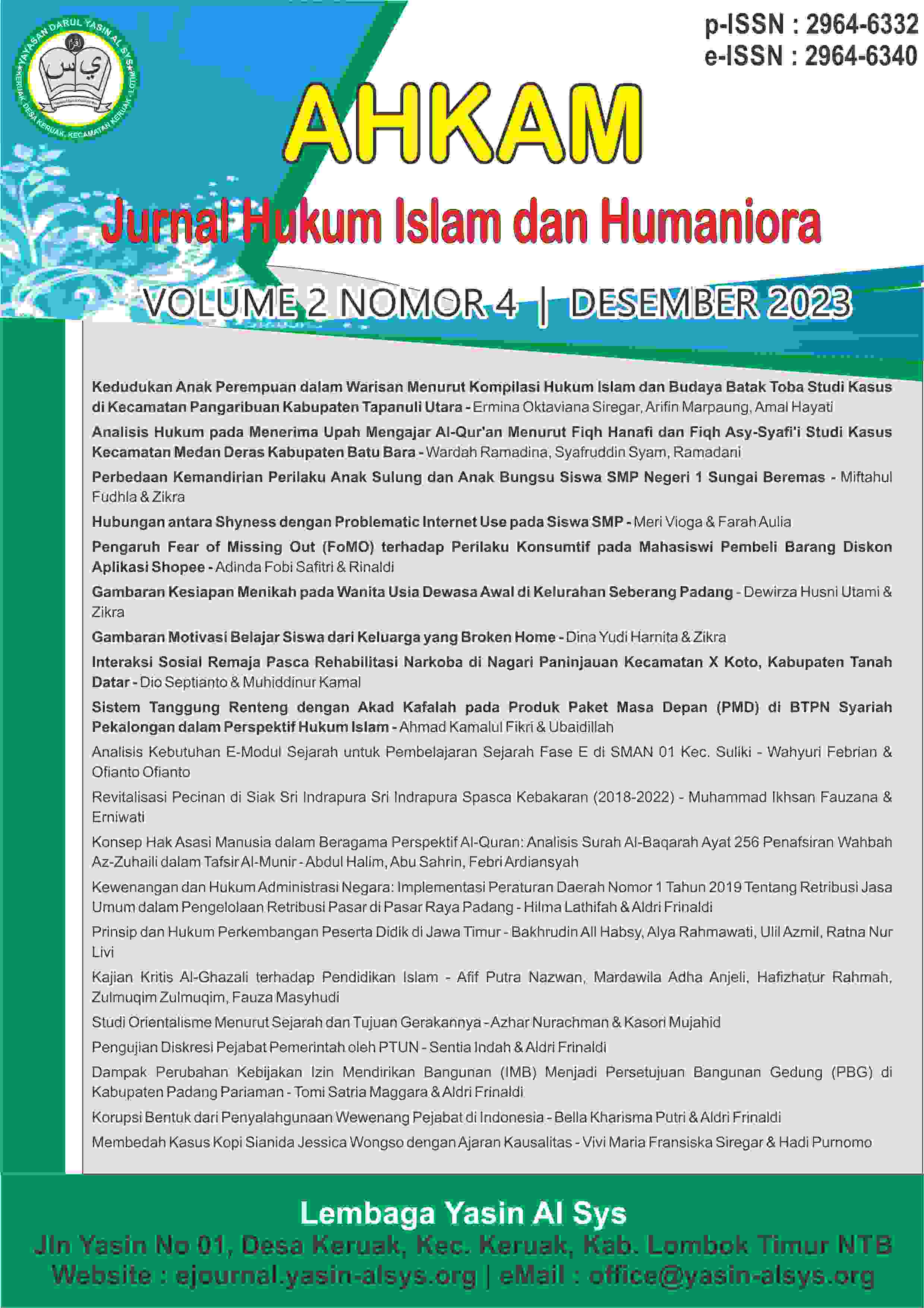
Studi Orientalisme Menurut Sejarah dan Tujuan Gerakannya
Main Article Content
Abstract
This article will elaborate in detail on Orientalism from a historical perspective. The study of Orientalism is complex, especially concerning the Orient, particularly Islam, and is driven by motives such as religious, scientific, economic, and political issues. The terms "Orientalism" and "Orientalist" emerged in Andalusia (Spain) in the 7th century Hijri or the 14th century AD. They have harmed Islam by submerging Muslims into misleading ideologies, particularly misleading the younger generation by diverting them from their religion through teachings of materialism and secularism. The stages of Orientalism development include Missionaries and anti-Islamic sentiments beginning in the 16th century AD, studies and dissemination in the 17th and 18th centuries, colonialism in the 19th century and the first quarter of the 20th century, and learning and politics in the latter half of the 19th century. The main goal of Orientalism is to uncover and reveal the symbolic meanings of deep-rooted Islamic cultural expressions, with the primary medium being the Arabic language.




Citation Metrics:




Downloads
Citation Metrics & Similar Scopus Articles
-
Allegretti M. (2026)miRquad: first-in-class dPCR multiplex TaqMan™ Advanced clinical research assay for microRNA detection in head and neck cancerJournal of Experimental and Clinical Cancer Research, 45(1)
-
Martins B.N.F.L. (2026)An educational intervention for teaching bad news communication in dentistry: A pilot study in ItalyJournal of Dentistry, 173
-
Zhang X. (2026)Development and frontier trends of research on the gut microbiota and cholangiocarcinomaSurgery Open Science, 33, 8-19
Article Details

Authors retain copyright and grant the journal right of first publication with the work simultaneously licensed under a Creative Commons Attribution-NonCommercial-ShareAlike 4.0 International License that allows others to share the work with an acknowledgement of the work's authorship and initial publication in this journal.
References
Akkase Teng, Muhammad Bahar. (2016). Orientalis Dan Orientalisme Dalam Perspektif Sejarah. Jurnal Ilmu Budaya, Vol. 1, no 4. P 48-65.
Zarkasyi, Hamid Fahmi. (2009) Liberalisasi Pemikiran Islam: Gerakan Bersama Missionaris, Orientalis dan Kolonialis. Tsaqafah: Jurnal Peradaban Islam. Vol. 5, No. 1.
Harlis Yurnalis, S. (2019). Studi Orientalis Terhadap Islam: Dorongan Dan Tujuan. Jurnal Al-Aqidah, 11(1), 63-75.
Haqan, A. (2011). Orientalisme dan Islam dalam Pergulatan Sejarah. Mutawatir : Jurnal Keilmuan Tafsir Hadith, 1(2), 155–167.
Hanafi, A. (1981). Orientalisme Ditinjau Menurut Kacamata Agama: Quran dan Hadits, Jakarta: Pustaka al Husna.
Kastolani. (2019). Dari Orientalisme ke Oksidentalisme, Salatiga: STAIN Salatiga Press.
Thaha Hamim, Islam dan NU di Bawah Tekanan Problematika Kontemporer (Surabaya: Diantama, 2004), 268.
Tadjab, Dimensi-dimensi Studi Islam (Surabaya: Abditama, 1994), 71.
Susmihara, S. (2017). SEJARAH PERKEMBANGAN ORIENTALIS. Rihlah: Jurnal Sejarah dan Kebudayaan, 5(1), 41-53.
Alim, A., & Arifullah, M. (2013). Respons Mahasiswa Muslim Terhadap Orientalisme: Studi Kasus Mahasiswa Fakultas Ushuluddin IAIN Sulthan Thaha Saifuddin Jambi. Kontekstualita: Jurnal Penelitian Sosial Keagamaan, 28(2), 37161.
Article Sidebar
 Page Numbers:
866-878
Page Numbers:
866-878
 Digital Object ID:













 Viewed: 919 times
 Downloaded: 641 times

LYAS Publisher cordially invites qualified professionals to serve as Editors or Reviewers. Your expertise will make an important contribution to maintaining and strengthening the academic quality of our publications. Interested applicants are kindly requested to complete the application form at the following link: Editors & Reviewers


Please feel free to contact us if you need any further information about the submission process or if you have any additional questions.

 Authors:
 Copyright :
Authors retain copyright and grant the journal right of first publication.
Explore Our Journals
Find the journal that best fits your research. If this journal does not match your manuscript’s scope, explore our portfolio below to select a more suitable publication venue.