
About the Journal
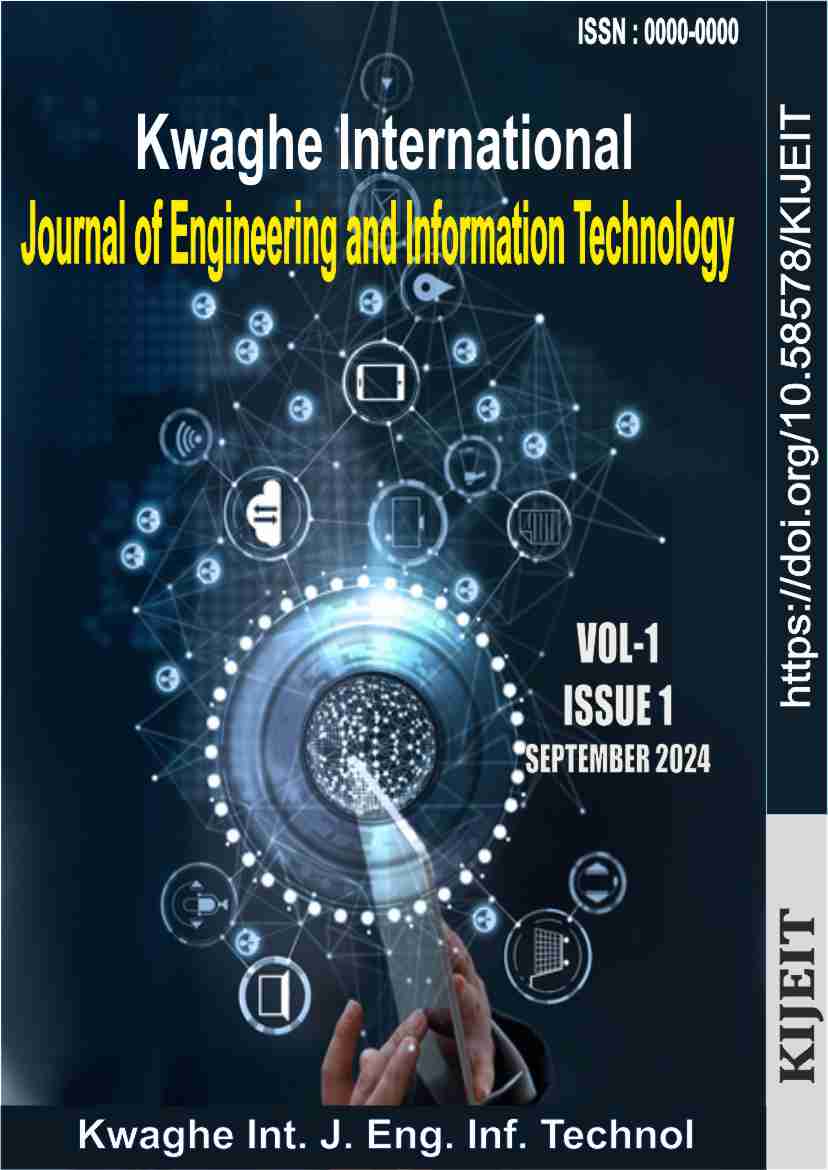
Kwaghe International Journal of Engineering and Information Technology
DOI Prefix: 10.58578/KIJEIT. The journal is an international, rigorously peer-reviewed forum dedicated to advancing engineering and information technology scholarship, especially research that contributes to technological innovation, systems development, and engineering solutions for contemporary scientific and societal challenges.
Peer Reviewed Engineering Information Technology
Citation Analysis and Visibility
Publisher: Darul Yasin Al Sys Foundation in cooperation with Federal University Wukari, Nigeria.
Kwaghe International Journal of Engineering and Information Technology (KIJEIT) is an international peer-reviewed journal dedicated to the dissemination of original research, theoretical developments, and applied innovation in engineering and information technology. The journal welcomes work that demonstrates technical rigor, methodological transparency, and relevance to current industrial, computational, digital, and engineering challenges in local and global contexts.
Aims
Kwaghe International Journal of Engineering and Information Technology aims to publish high-quality, peer-reviewed scholarship that advances engineering design, computational systems, digital technologies, and information-based innovation. The journal prioritizes contributions with clear technical novelty, sound validation, and practical or theoretical significance for engineering and information technology.
• Engineering Innovation: promote rigorous research on engineering systems, design, modeling, optimization, and implementation.
• Information Technology: support advances in software, computing, data systems, networking, and digital solutions.
• Interdisciplinary Integration: encourage studies connecting engineering with information technology to solve complex real-world problems.
• Applied Relevance: welcome research that demonstrates practical value, scalability, reliability, and technological impact.
• Information Technology: support advances in software, computing, data systems, networking, and digital solutions.
• Interdisciplinary Integration: encourage studies connecting engineering with information technology to solve complex real-world problems.
• Applied Relevance: welcome research that demonstrates practical value, scalability, reliability, and technological impact.
Submissions should clearly define the technical problem, explain the methodological approach precisely, report validation or evaluation transparently, and demonstrate a meaningful contribution to engineering and/or information technology scholarship.
Scope
KIJEIT welcomes original research papers, theoretical studies, system designs, and applied investigations in engineering and information technology. The journal considers work in both foundational and applied domains, provided the engineering or information-technology contribution is explicit, analytically sound, and well reported.
• Computer and Information Technology: software engineering, information systems, databases, cloud computing, artificial intelligence, and data analytics.
• Electrical and Electronic Engineering: electronics, instrumentation, embedded systems, signal processing, communications, and control systems.
• Networks and Cybersecurity: network architecture, internet technologies, digital security, cryptography, and secure system implementation.
• Automation and Intelligent Systems: robotics, IoT, smart systems, human–machine interaction, and technology-supported optimization.
• Engineering Applications: computational modeling, simulation, algorithm development, system evaluation, and interdisciplinary engineering solutions.
• Electrical and Electronic Engineering: electronics, instrumentation, embedded systems, signal processing, communications, and control systems.
• Networks and Cybersecurity: network architecture, internet technologies, digital security, cryptography, and secure system implementation.
• Automation and Intelligent Systems: robotics, IoT, smart systems, human–machine interaction, and technology-supported optimization.
• Engineering Applications: computational modeling, simulation, algorithm development, system evaluation, and interdisciplinary engineering solutions.
Priority is given to manuscripts with strong technical framing, transparent evaluation procedures, and conclusions that are logically supported by experimental, computational, or analytical evidence.