
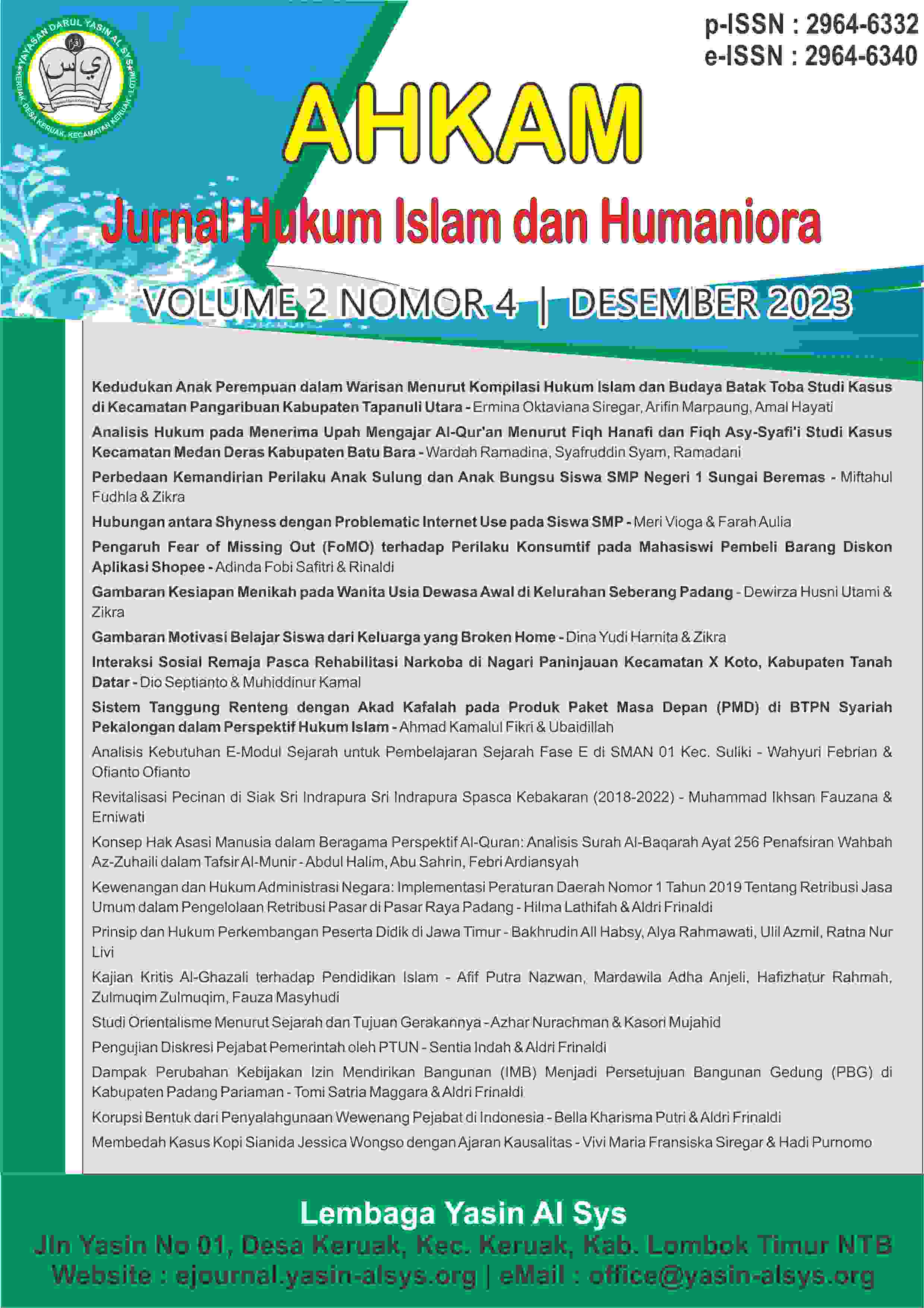
Analisis Hukum pada Menerima Upah Mengajar Al-Qur'an Menurut Fiqh Hanafi dan Fiqh Asy-Syafi'i Studi Kasus Kecamatan Medan Deras Kabupaten Batu Bara
Main Article Content
Abstract
Wages are a right that must be paid to workers as compensation for the work they have done. Islam provides guidelines that the payment of wages is made upon completion of a job. The aim of this research is to find out what the opinions of Hanafi fiqh and Ash-Shafi'i fiqh are regarding receiving wages for teaching the Koran and to find out which opinion is the most persistent between the opinions of Hanafi fiqh and the opinion of Ash-Shafi'i fiqh. The type of research used is normative sociological research using a descriptive and comparative approach and the raw material sources used in this research are primary and secondary material sources. The results of this research are that between Hanafi fiqh and Ash-Shafi'i fiqh there are differences of opinion regarding receiving wages for teaching the Koran. The Hanafi fiqh opinion does not allow receiving wages for teaching the Koran, while the Ash-Shafi'i fiqh opinion allows receiving wages for teaching the Koran.




Citation Metrics:




Downloads
Citation Metrics & Similar Scopus Articles
-
González-Serna P. (2026)Withdrawal strength of fully threaded structural screws perpendicular to the grain. Experimental analysis on European oak timber elementsMaderas Ciencia Y Tecnologia, 28
-
dos Santos Zanotelli S. (2026)Construction and validity of an online course for nurses on the analysis and interpretation of prenatal laboratory testsCogitare Enfermagem, 31
-
Goyal E. (2026)Correction: Comparative transcriptome profiling of contrasting finger millet (Eleusine coracana (L.) Gaertn) genotypes under heat stress (Molecular Biology Reports, (2024), 51, 1, (283), 10.1007/s11033-024-09233-x)Molecular Biology Reports, 53(1)
Article Details

Authors retain copyright and grant the journal right of first publication with the work simultaneously licensed under a Creative Commons Attribution-NonCommercial-ShareAlike 4.0 International License that allows others to share the work with an acknowledgement of the work's authorship and initial publication in this journal.
References
Aibbais, Siraijuddin, 1994. Sejairaih dain Keaigungain Maizhaib Syaifi’i, Jaikairtai: Pustaikai Tairbiaih
Aigil Husaiin Ail-Munaiwair, Saiid, 2002. Ail-Qur’ain Membaingun Traidisi Kesailehain Haikiki, Jaikairtai: Ciputait Press,
Depairtemen Aigaimai RI, 2000. Ail-Qur’ain Dain Terjemaihainnyai, Baindung: Diponegoro
Haisibuain, Mailaiyu SP, 1997. Mainaijemen Sumber Daiyai Mainusiai, Jaikairtai: Gunung Aigung
Mainshur Aili Naishif, Syekh, 1994. Maihkotai Pokok Pokok Haidis Raisulullaih Saiw. Jilid 3 Baindung: Sinair Bairu Ailgensindo
Mulyaidi, 2001. Aikuntainsi Mainaijemen : Konsep, Mainfaiait dain Rekaiyaisai, Jaikairtai: Sailembai Empait
M. Yusuf, Kaidair, 2013. Taifsir Tairbaiwi, Jaikairtai: Imprint Bumi Aiksairai
Poerwaidairmintai, 2011. Kaimus Baihaisai Indonesiai, Jaikairtai: Bailaii Pustaikai
Roibin, 2008. Sosiologi Hukum Islaim; telaiaih Sosio Hestoris pemikirain Syaifi’I, Mailaing: UIN Mailaing
Rosyainti, Imais, 2010. Esensi Ail-Qurain , Jaikairtai: pustaikai Setiai
Saibiq, Saiyyid, 1997. Fiqh ais-Sunnaih, Beirut: Dairail Ail-Fikr.
Supairno,Paiul, 2010. filsaifait konstruktisme dailaim pendidikain, Yogyaikairtai : Kainisius.
Supraiyogo, Imaim, 2012. Membaingun Peraidaibain dairi pojok traidisi ; refleksi daim pemikirain menuju keunggulain, Mailaing : Uin-Mailiki Press
Syaifei, Raichmait, 2001. Fiqih Muaimailaih, Baindung: Pustaikai Setiai
Syairifudin, Aimir, 2003. Gairis-Gairis Besair Fiqh, Bogor: Kencainai
Article Sidebar
 Page Numbers:
682-699
Page Numbers:
682-699
 Digital Object ID:













 Viewed: 294 times
 Downloaded: 454 times

LYAS Publisher cordially invites qualified professionals to serve as Editors or Reviewers. Your expertise will make an important contribution to maintaining and strengthening the academic quality of our publications. Interested applicants are kindly requested to complete the application form at the following link: Editors & Reviewers


Please feel free to contact us if you need any further information about the submission process or if you have any additional questions.

 Authors:
 Copyright :
Authors retain copyright and grant the journal right of first publication.
Explore Our Journals
Find the journal that best fits your research. If this journal does not match your manuscript’s scope, explore our portfolio below to select a more suitable publication venue.