
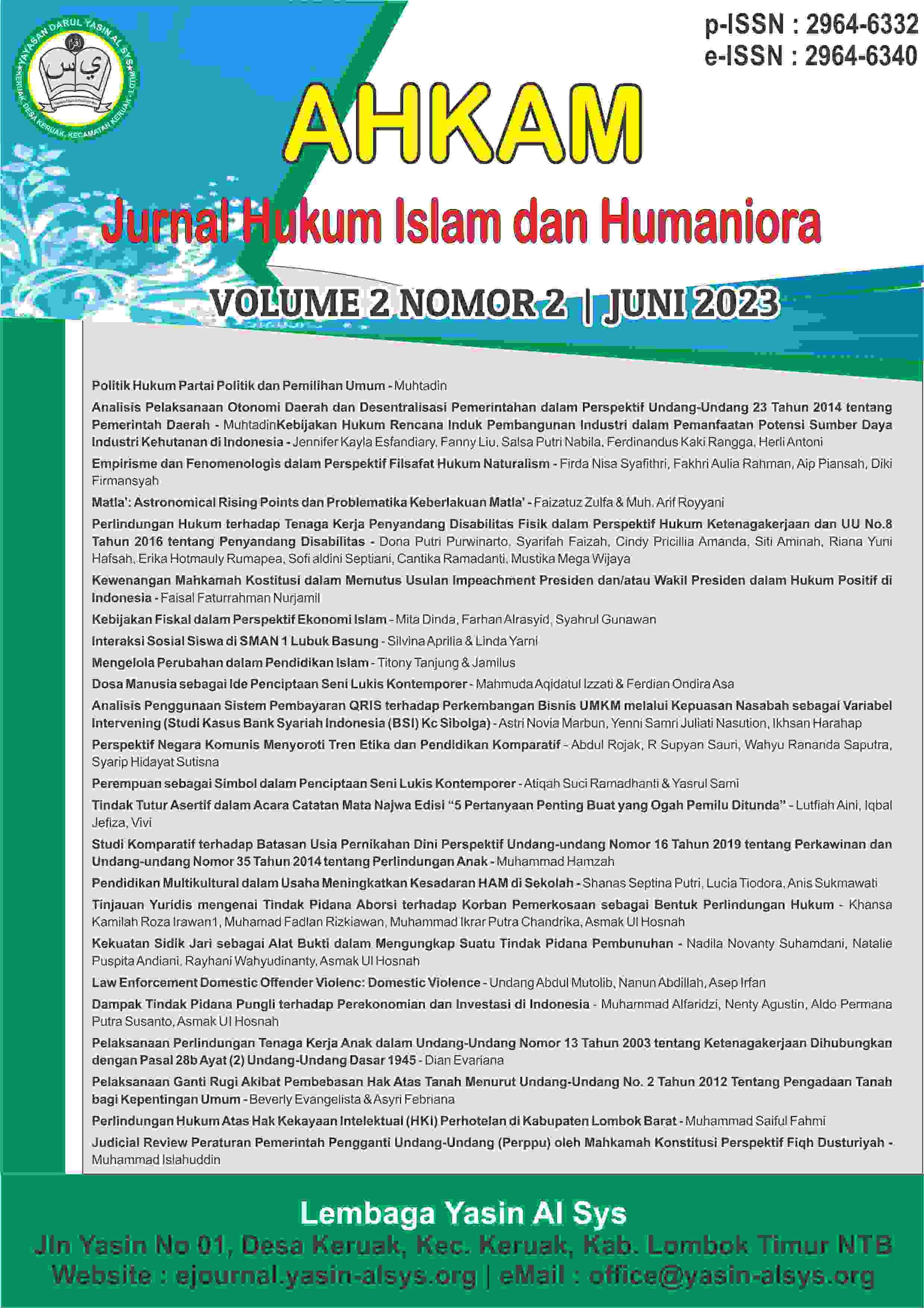
Interaksi Sosial Siswa di SMAN 1 Lubuk Basung
Main Article Content
Abstract
Student ethics in speaking kindly to peers and to elders such as lack of respect for each other, lack of courtesy when speaking. The aim of the study was to find out the ethics of social interaction for class XI IPA students at SMAN 1 Lubuk Basung. This type of qualitative research is descriptive in nature, key informants are homeroom teachers for class XI IPA and supporting informants for class XI IPA students. Data was collected using observation data collection techniques and interviews. The results of the research were processed using descriptive analytic data analysis. The results showed that the ethics of social interaction for class XI IPA students at SMA N 1 Lubuk Basung, namely, manners in interacting include, the topics discussed should revolve around things that are useful and good, avoid talking about bad, and not useful, not lie in what he says, don't talk about other people's shortcomings, spread bad rumors, don't criticize or ridicule other people, don't act arrogant or arrogant when speaking, don't monopolize the conversation in a forum, don't raise your voice in conversations with other people, so can cause noise, criticizing people must be wise, good language and not dropping the charisma of the person being criticized, speaking must be appropriate to the conditions and situation, speaking calmly so that others can easily understand it, and speaking must be brief and clear, so as not to bore for listeners.




Citation Metrics:




Downloads
Citation Metrics & Similar Scopus Articles
-
Fazeli F. (2027)The representation of the properties of the social actors in the two poetries of“Aghadar”and “Fokhos”written by Sheevan Foumani in accordance with the socio-semantic model and semio-semantic analysisLanguage Related Research, 17(4), 397-431
-
Trisnowati E. (2027)Science, Technology, Engineering, and Mathematics (STEM) and Research Skill Development (RSD) in Science Education in Higher Education: A Delphi-Based ModelAsean Journal of Educational Research and Technology, 6(2), 253-268
-
Zhu P. (2027)Materials–Structure–Hardware–Algorithm Co-Driven Hierarchical Optimization for Flexible SensorsNano Micro Letters, 19(1)
Article Details

Authors retain copyright and grant the journal right of first publication with the work simultaneously licensed under a Creative Commons Attribution-NonCommercial-ShareAlike 4.0 International License that allows others to share the work with an acknowledgement of the work's authorship and initial publication in this journal.
References
Abbas, S. (2006). Pembelajaran Bahasa Indonesia yang Efektif di SD. Jakarta: Departemen Pendidikan Nasional
Ariyanti, L. D & Zulaeha, I. (2017). Tindak Tutur Ekspresif Humanis dalam Interaksi Pembelajaran. Semarang: Universitas Negeri Semarang
Emizar. (2012). Metodologi Penelitian Kualitatif : Analisis Data. Jakarta: Rineka Cipta
Hamka. (1984). Tafsir Al-Azhar. Jakarta : Pustaka Panji Mas
Juminem, J. (2019). Adab Bermedia Sosial dalam Pandangan Islam, Geneologi PAI; Jurnal Pendidikan Agama Islam 6, no. 1 (30 Juni 2019). Hal 30
Setiadi, E. M & Kolip, U. (2011). Pengantar Sosiologi. Pemahaman Fakta dan Gejala Permasalahan Sosial: Teori, Aplikasi, dan Pemecahannya Cet. II. Jakarta: Kencana
Sigiro, E. L. (2018). Pengaruh interaksi sosial dan peran gender terhadap pertimbangan moral siswa SMA Negri 12 Medan. Medan:UMA
Soekanto, S. (2010). Sosiologi Suatu Pengantar Cet. Ke-43. Jakarta: Rajawali Press
Syaodih S, N. (2010). Metode Penelitian Pendidikan. Bandung: PT. Remaja Rosdakarya
Tarigan & Guntur, H. (1983). Strategi Pengajaran dan Pembelajaran Berbahasa, Bandung: Angkasa
Yusri, Fadhila. (2014). Instrumen Non Tes dalam Konseling,. Bukittinggi: Tim Kreatif
Yusuf, M. 2013). Metode Penelitian : Kuantitatif, Kualitatif dan Gabungan. Bandung : Alfabeta
Yusuf, S. (2008). Psikologi Perkembangan Anak dan Remaja. Bandung: PT Remaja Rosdakarya
Article Sidebar
 Page Numbers:
335-348
Page Numbers:
335-348
 Digital Object ID:













 Viewed: 344 times
 Downloaded: 417 times

LYAS Publisher cordially invites qualified professionals to serve as Editors or Reviewers. Your expertise will make an important contribution to maintaining and strengthening the academic quality of our publications. Interested applicants are kindly requested to complete the application form at the following link: Editors & Reviewers


Please feel free to contact us if you need any further information about the submission process or if you have any additional questions.

 Authors:
 Copyright :
Authors retain copyright and grant the journal right of first publication.
Explore Our Journals
Find the journal that best fits your research. If this journal does not match your manuscript’s scope, explore our portfolio below to select a more suitable publication venue.